- +91 98673 70009
- drnikitappatel@gmail.com
- Mon–Sat, 10:00 AM – 7:30 PM

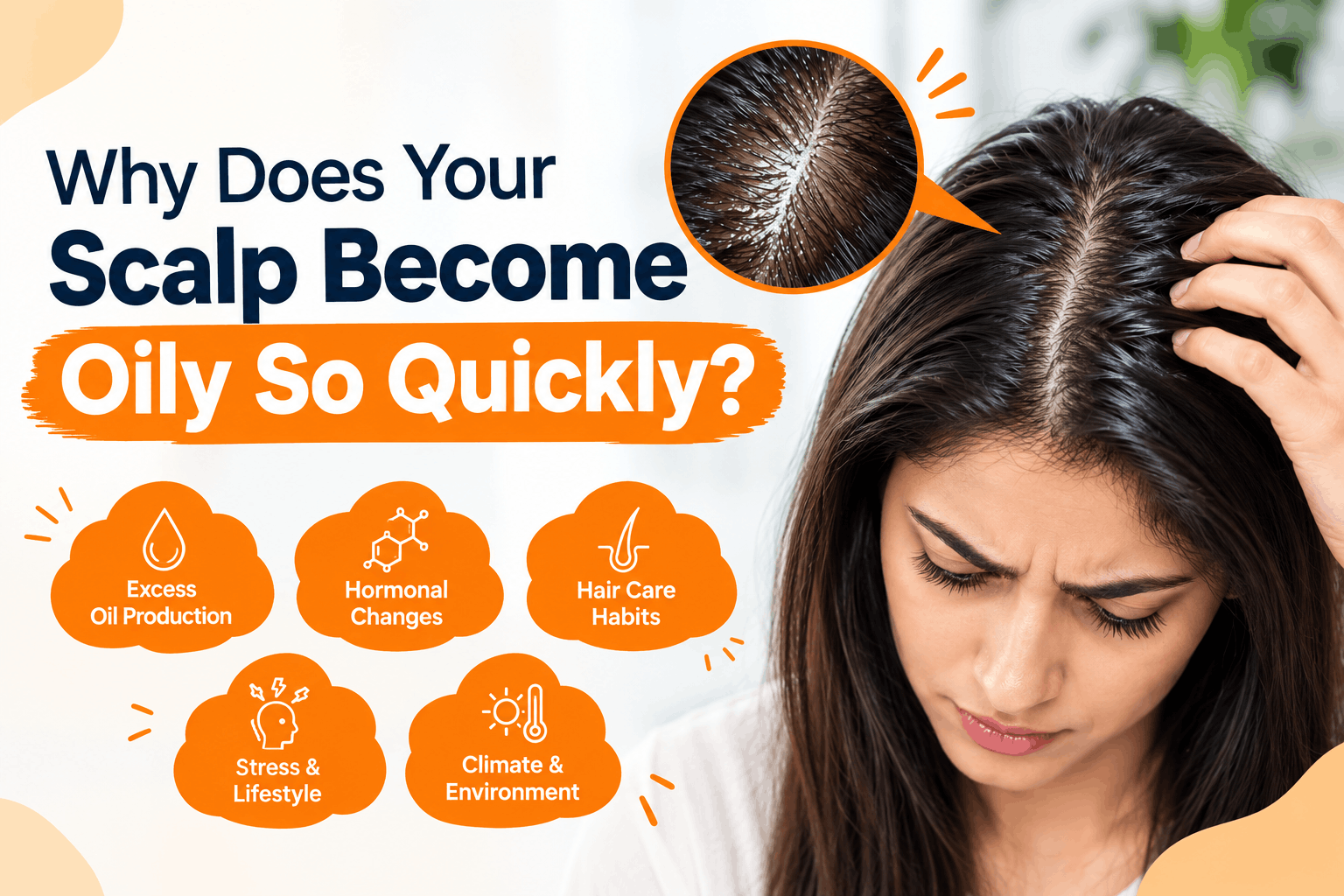
Have you ever washed your hair in the morning, only to notice that your scalp looks oily again by the end of the day? If this happens regularly, you may wonder, why does your scalp become oily so quickly?
An oily scalp is usually caused by excess production of sebum, the natural oil produced by the sebaceous glands in your skin. Sebum helps protect the scalp and hair, but too much of it can make your hair look greasy, flat, or unwashed. In some people, excessive scalp oiliness may also be associated with dandruff, itching, or scalp breakouts.
Understanding the reason behind an oily scalp can help you choose the right hair and scalp-care routine.
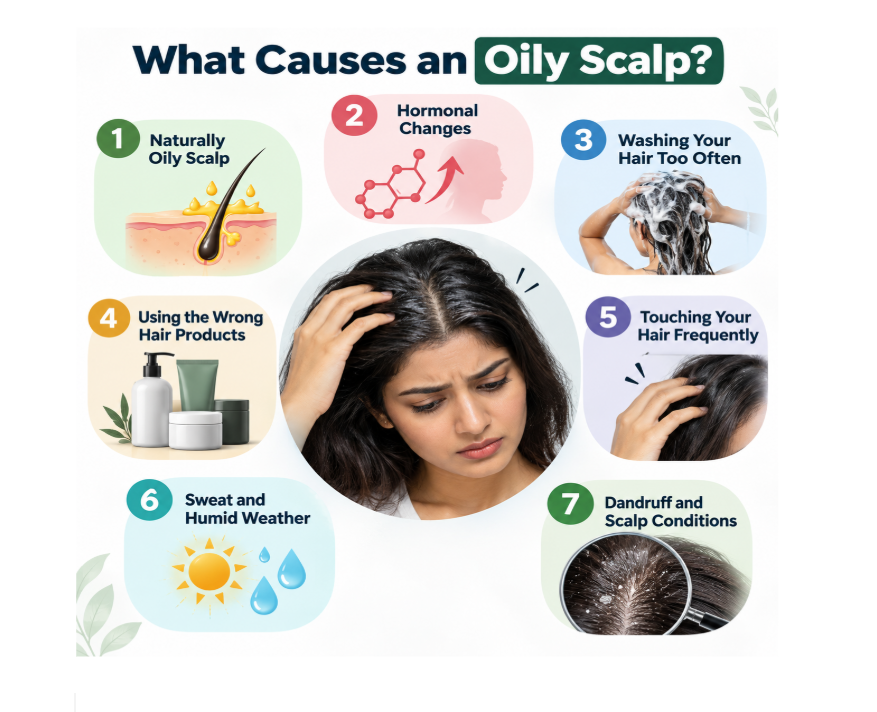
There is no single reason for an oily scalp. Several factors can increase oil production or make your scalp appear greasy more quickly.
Some people naturally have more active sebaceous glands. If your scalp produces more sebum than usual, your hair may become oily soon after washing.
Genetics can also play a role. If oily skin or hair runs in your family, you may be more likely to experience an oily scalp.
Hormones can influence the activity of your sebaceous glands. Changes during puberty, menstruation, pregnancy, or other hormonal fluctuations may increase oil production.
If you suddenly notice a significant change in scalp oiliness along with other skin or hair concerns, a consultation with a dermatologist may help identify the underlying cause.
It may seem logical to wash oily hair several times a day, but excessive washing can sometimes irritate the scalp and disturb its natural balance.
Using harsh shampoos or washing your scalp too aggressively may also cause dryness and irritation. Instead, choose a gentle shampoo suitable for your scalp type and follow a consistent washing routine.
Heavy conditioners, hair oils, serums, styling creams, and other products can build up on the scalp and make it look greasy.
Hair products should generally be applied according to your hair type. If your scalp is oily, avoid unnecessarily applying heavy products directly to the roots unless recommended by a professional.
Your hands can transfer oil, sweat, dirt, and product residue to your hair. Constantly touching or brushing your hair may therefore make it appear oily faster.
Try to avoid repeatedly touching your scalp throughout the day.
Heat and humidity can increase sweating and make an oily scalp more noticeable. This can be especially troublesome during hot and humid weather in places such as Thane.
After exercising or sweating heavily, keeping your scalp clean and allowing it to dry properly can help maintain scalp hygiene.
An oily scalp can sometimes occur along with dandruff or seborrheic dermatitis. These conditions may cause symptoms such as flaking, redness, itching, or greasy scales.
If your oily scalp is accompanied by persistent itching, redness, severe dandruff, or hair loss, it is better to consult a dermatologist instead of trying multiple products on your own.
Managing an oily scalp starts with understanding what your scalp needs. Some simple habits may help:
If oiliness continues despite a suitable routine, professional evaluation can help determine whether an underlying scalp condition is contributing to the problem.
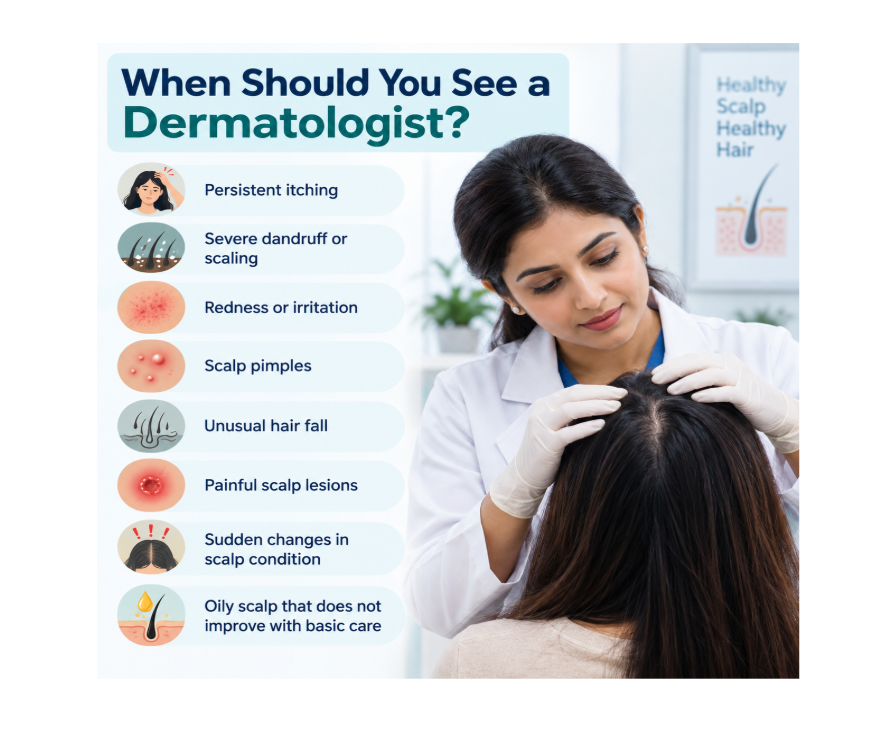
Occasional scalp oiliness is usually not a major concern. However, you should consider seeing a skin specialist if oily scalp is accompanied by:
A dermatologist can examine your scalp and recommend treatment based on the actual cause rather than simply treating the oiliness.
If you are looking for a Skin clinic in Thane choosing a qualified dermatologist can help you receive personalized advice for your skin and scalp concerns.
At Dr. Nikita Patel, patients can seek professional guidance for a range of dermatological concerns. A skin specialist clinic in Thane can assess your scalp condition, understand your symptoms and lifestyle, and recommend suitable scalp-care or treatment options when necessary.
Rather than changing shampoos repeatedly, professional evaluation may be useful when oily scalp is persistent or associated with other symptoms. Visiting a reliable skin care clinic in Thane can help you understand whether your symptoms are related to simple excess oil or an underlying scalp condition.
Not necessarily. An oily scalp does not automatically mean that you have poor hygiene. Sebum production is a natural process, and some people simply produce more scalp oil than others. Hormones, genetics, weather, stress, hair products, and certain scalp conditions can all influence oil production.
If you are concerned about excessive scalp oil or related skin issues, consulting the best skin care clinic in Thane can help you understand the underlying cause and choose the right treatment. A professional consultation at the best skin clinic center in Thane can also help you build a scalp-care routine suited to your individual skin and hair needs.
The goal is not to remove every trace of natural oil. Instead, the aim is to maintain a healthy scalp balance with an appropriate routine and professional treatment when needed.
A dermatology clinic can help with much more than scalp concerns. If you are exploring cosmetic or skin treatments, it is important to choose treatment based on your skin type and individual needs.
For example, people looking for long-term solutions for unwanted body or facial hair may consider Laser Hair Removal You can learn more about the treatment here:
If you are searching online for the best laser hair removal clinic you can also explore the provided local listing here:
So, why does your scalp become oily so quickly? The answer can include natural sebum production, genetics, hormonal changes, weather, sweating, hair products, washing habits, or an underlying scalp condition.
An oily scalp is common, but persistent oiliness accompanied by dandruff, itching, redness, pimples, or hair fall should not be ignored. If you are searching for a best skin clinic in Thane or a best clinic for skin treatment in Thane professional dermatological guidance can help you understand your scalp better.
For personalized skin and scalp advice, Dr. Nikita Patel’s skin clinic in Thane can help you identify the possible cause of your concern and choose an appropriate care approach. The right diagnosis and consistent scalp-care routine can make a significant difference in maintaining a healthier scalp.
You don't need to choose a procedure before your appointment.
Start with your concern. Your consultation is designed to understand your skin or hair, establish a diagnosis, and discuss the treatment options appropriate for you.