- +91 98673 70009
- drnikitappatel@gmail.com
- Mon–Sat, 10:00 AM – 7:30 PM
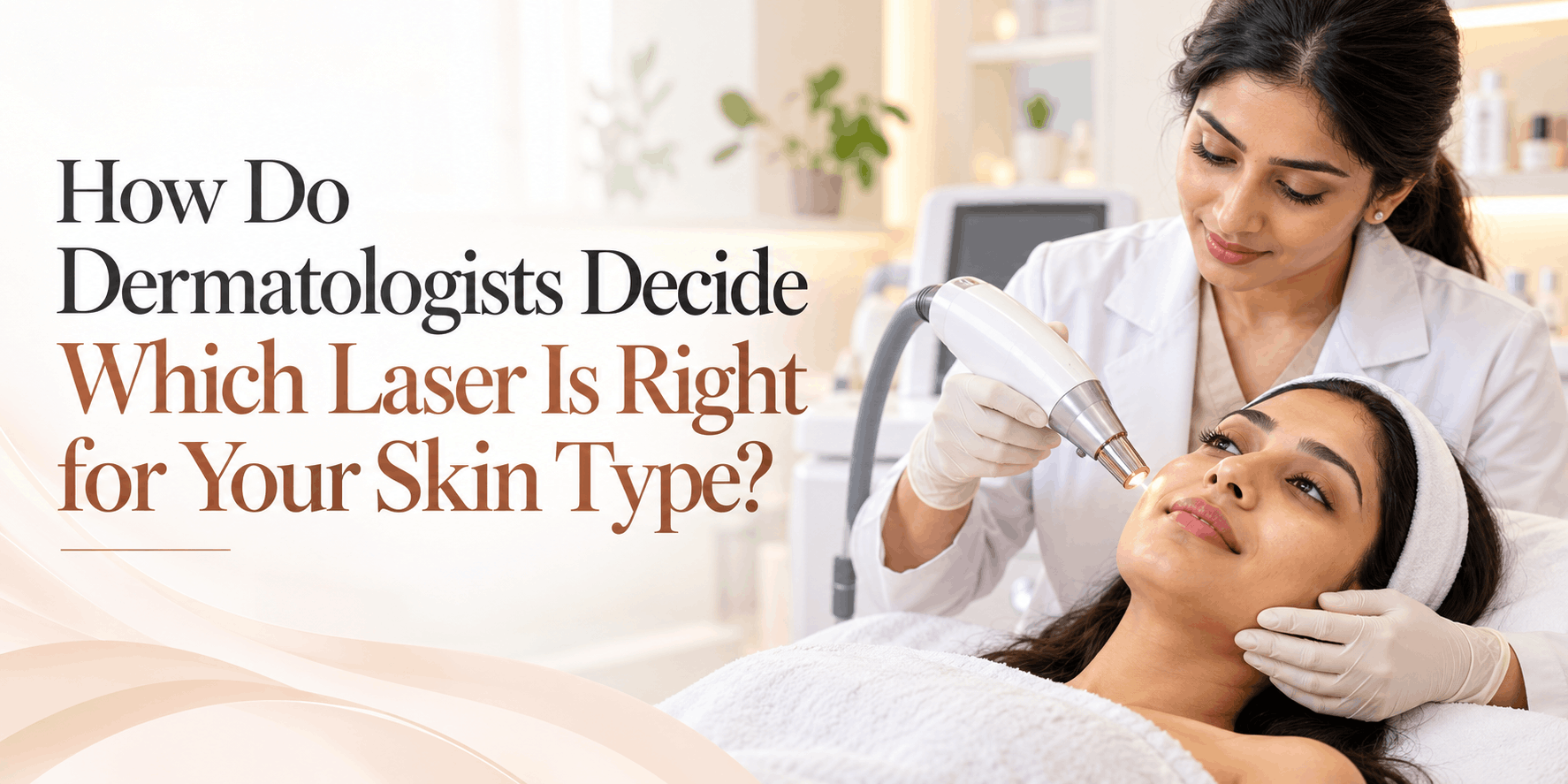
Laser treatments are increasingly used for unwanted hair, pigmentation, acne scars, uneven skin texture, and other cosmetic skin concerns. However, the same laser is not suitable for every person. How Do Dermatologists Decide Which Laser Is Right for Your Skin Type? Dermatologists consider several factors, including skin tone, the condition being treated, hair colour, treatment area, previous skin treatments, and the patient’s individual goals.
Choosing the appropriate laser is important because different technologies work in different ways. A professional skin assessment helps the dermatologist select a suitable treatment and adjust the settings according to the patient’s skin.
Skin contains melanin, the natural pigment responsible for skin colour. Since laser energy can interact with melanin, your skin tone is an important factor when choosing a suitable laser treatment. A best skin specialist in Thane carefully assesses your skin type, pigmentation, sensitivity, and treatment goals before recommending a laser.
People with darker skin tones may need specific laser technologies and carefully adjusted settings to minimise the risk of unwanted pigmentation, irritation, or other side effects. A detailed skin assessment helps the dermatologist select an appropriate treatment approach and ensure the procedure is performed as safely as possible.
Before treatment, the dermatologist usually examines the skin and discusses your concerns, medical history, medications, allergies, previous cosmetic procedures, and history of skin reactions.
The doctor may also ask about sun exposure and whether your skin has recently been tanned or sunburned. This information helps determine whether treatment should proceed immediately or be postponed.
A proper consultation is therefore an important part of safe laser treatment.
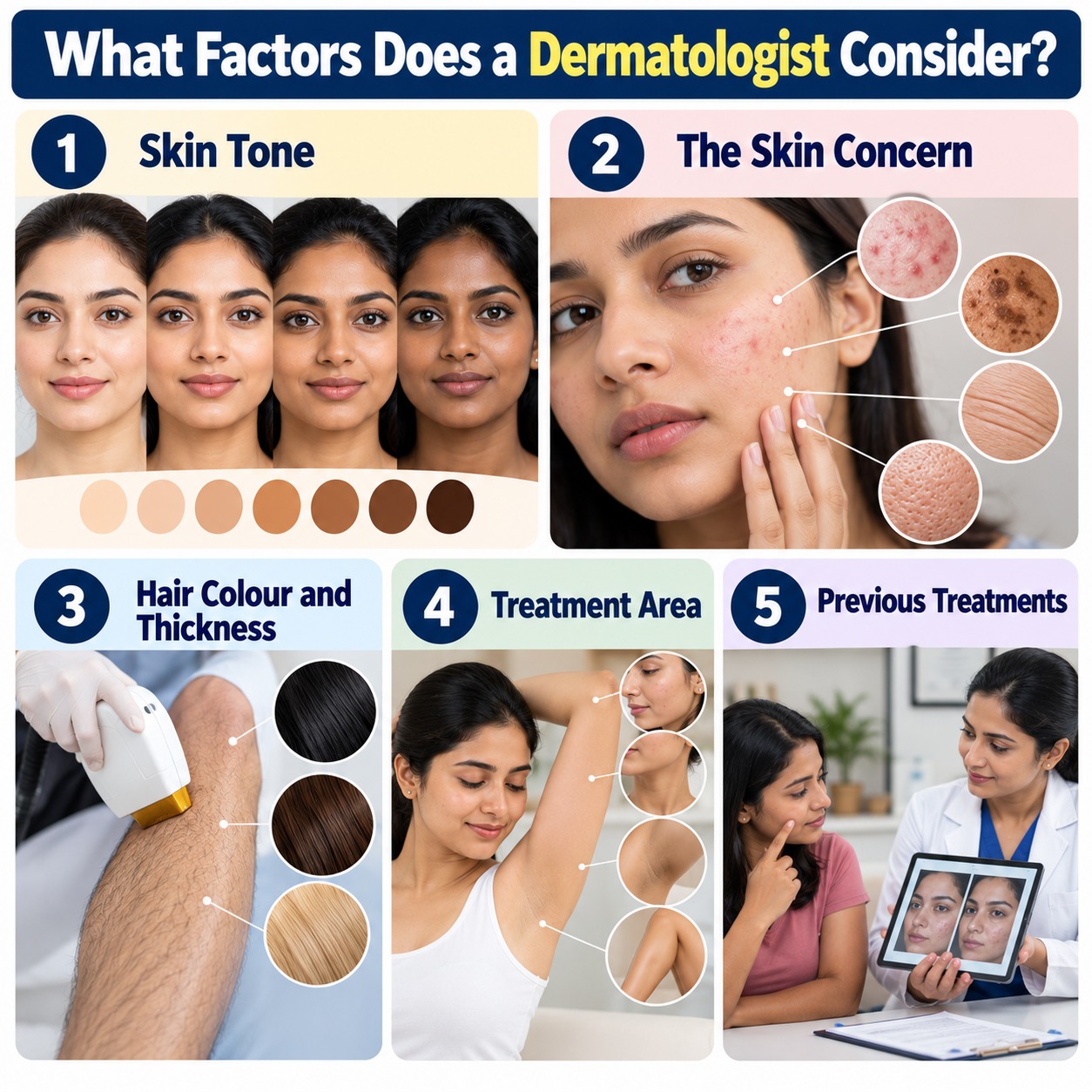
Your natural skin tone is one of the first factors considered during a laser consultation. Dermatologists may assess how much melanin is present in the skin and whether you have recently been exposed to sunlight.
The laser wavelength and energy level can then be selected according to your skin characteristics. Personalised settings are important because overly aggressive treatment may increase the risk of side effects.
The purpose of the treatment also determines which laser may be appropriate. A laser used for hair reduction may work differently from one designed to improve pigmentation, acne scars, or skin texture.
For this reason, patients should first receive a proper diagnosis rather than choosing a laser simply because it is popular or widely advertised.
For laser hair removal, hair characteristics are particularly important. Darker and thicker hair often responds differently from fine or very light hair because laser treatments commonly target pigment within the hair.
The dermatologist may examine the colour, thickness, density, and growth pattern before recommending a suitable treatment plan.
The face, underarms, arms, legs, back, and other areas may require different approaches. Skin sensitivity and hair characteristics can vary significantly from one part of the body to another.
A dermatologist may therefore adjust treatment settings according to the specific area being treated.
Your previous skincare and cosmetic treatments are also relevant. Waxing, chemical peels, tanning, exfoliation, or other procedures may affect the timing and safety of laser treatment.
Always inform your dermatologist about recent procedures and the products you regularly use on your skin.
Selecting the laser technology is only one part of the process. The settings used during treatment can also affect the results and the risk of side effects.
Depending on the procedure, factors such as energy level, pulse duration, spot size, treatment frequency, and cooling may be adjusted.
Using the same settings for every patient is not appropriate because skin and hair characteristics vary from person to person.
Indian skin includes a wide range of skin tones, from lighter to deeper pigmentation. Therefore, treatment should be personalised according to the individual’s skin rather than based simply on ethnicity.
Some people with darker skin may have a higher risk of pigmentation changes after certain laser procedures. An experienced dermatologist can select an appropriate technology and treatment protocol after assessing the skin.
If you are searching for a Skin clinic in Thane look for a clinic that provides a proper consultation before recommending laser treatment. The treatment should be selected according to your skin and specific concern.
A skin specialist clinic in Thane can evaluate whether your concern is suitable for laser treatment and explain the possible benefits, limitations, and risks.
When comparing a skin care clinic in Thane consider factors such as professional expertise, hygiene, treatment technology, consultation quality, and aftercare guidance.
People searching for the best skin specialist in Thane should consider the dermatologist’s experience with different skin types and cosmetic procedures rather than choosing a provider based only on online promotions.
Laser hair removal requires individual assessment. A dermatologist may consider your skin tone, hair colour, hair thickness, treatment area, and previous methods of hair removal before recommending a treatment plan.
The number of sessions and expected response can also vary between individuals. Your dermatologist can explain what results may realistically be expected after examining your skin and hair.
If you are researching the best laser hair removal clinic look for a provider that performs an individual assessment instead of using identical treatment settings for every patient.
Two people may have the same treatment area but require different approaches. Differences in skin tone, hair thickness, sensitivity, previous tanning, and medical history can affect treatment planning.
If you are comparing a best laser hair removal center ask whether the clinic evaluates your skin and hair before recommending the procedure.
The quality of treatment depends not only on the equipment but also on appropriate patient selection, settings, technique, and follow-up care.
Your dermatologist will provide instructions according to the type of laser being used. General recommendations may include:
Do not start or stop medicines or skincare products without discussing them with your doctor.
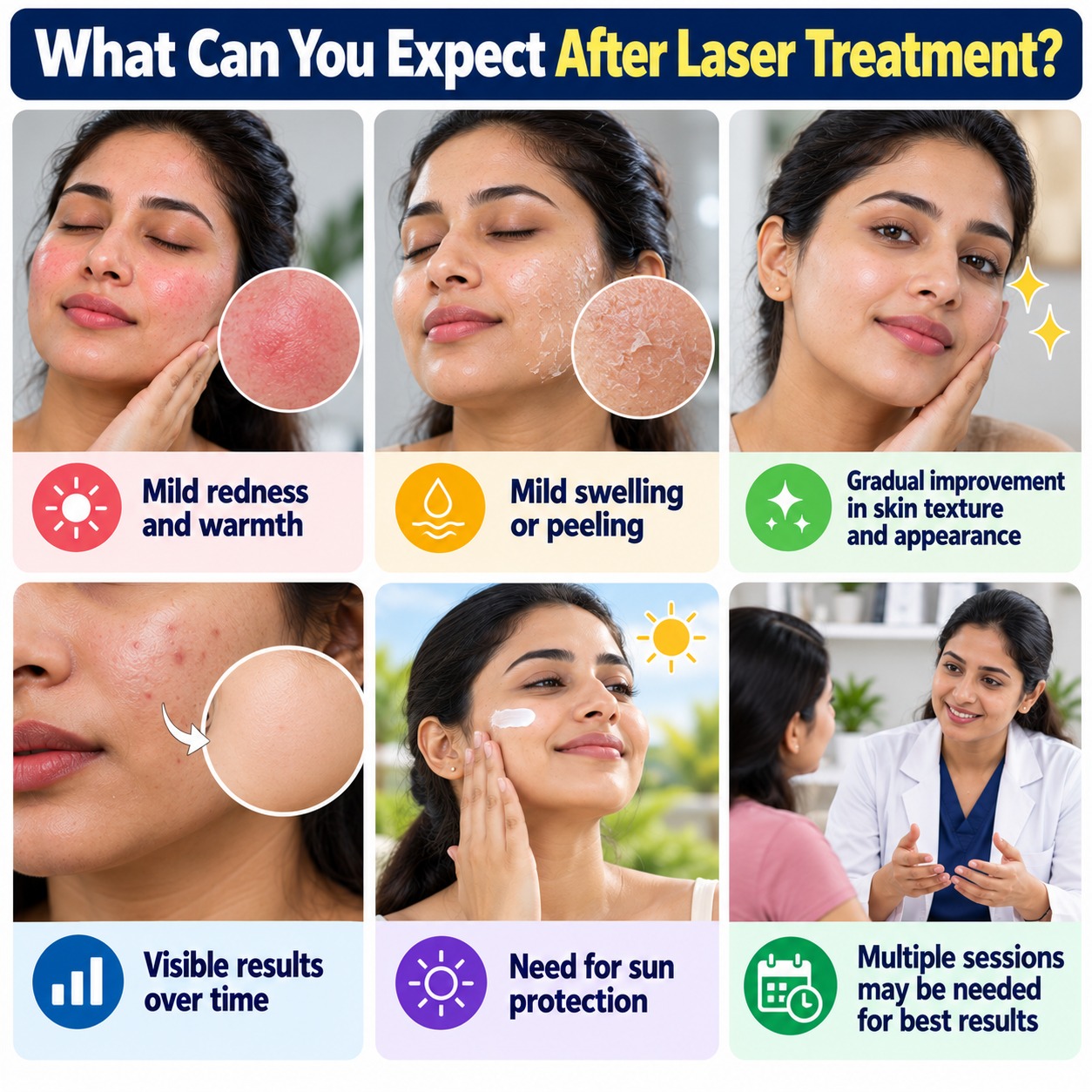
Some laser treatments may cause temporary redness, warmth, mild swelling, or sensitivity. These effects can vary depending on the type of laser and the individual’s skin.
Your dermatologist may recommend gentle skincare, moisturisation, sunscreen, and temporary avoidance of certain products or cosmetic procedures.
Following aftercare instructions can help support the healing process and reduce unnecessary irritation.
When searching for the best skin care clinic in Thane focus on the quality of consultation and whether treatment recommendations are personalised to your skin.
If you are looking for the best clinic for skin treatment in Thane ask about the dermatologist’s experience, the technology used, expected results, possible side effects, and aftercare.
The best skin clinic center in Thane is not necessarily the one with the most machines or advertisements. A suitable clinic should prioritise proper assessment, safe treatment practices, and realistic expectations.
Before undergoing laser hair removal, ask the clinic which technology is being recommended for your skin and hair type. You can also discuss how many sessions may be required and what preparation and aftercare are expected.
For more information about the procedure, you can explore best laser hair removal clinic services and understand whether the treatment is suitable for your specific concern.
Laser treatment may need to be delayed if the skin has an active infection, significant irritation, recent sunburn, or another condition that could increase the risk of complications.
Certain medications and recent cosmetic procedures may also affect treatment planning. Always give your dermatologist complete information during your consultation.
Choosing a laser should never be based simply on the newest machine or the treatment that is most heavily advertised. Dermatologists consider skin tone, the condition being treated, hair characteristics, treatment area, previous procedures, and individual medical history before planning treatment.
If you are considering laser treatment, a professional consultation can help determine whether the procedure is suitable for your skin and which approach may be appropriate.
If you are specifically searching for Dr. Nikita Patel skin clinic in Thane discussing your concerns with a dermatologist can help you understand suitable treatment options.
Patients looking for Dr. Patel’s skin clinic in Thane should also discuss their medical history and treatment expectations before starting a laser procedure.
The goal should always be personalised, safe, and medically appropriate laser treatment rather than simply choosing a particular laser by name.
You don't need to choose a procedure before your appointment.
Start with your concern. Your consultation is designed to understand your skin or hair, establish a diagnosis, and discuss the treatment options appropriate for you.