- +91 98673 70009
- drnikitappatel@gmail.com
- Mon–Sat, 10:00 AM – 7:30 PM
Dealing with relentless breakouts can be incredibly frustrating and exhausting. You might have tried every trending serum, face wash, and home remedy, only to wake up with new blemishes. It is completely normal to feel overwhelmed, but it is important to know that you are not doing anything wrong—you might just be treating the wrong type of acne. The truth is, not all pimples are created equal, and understanding exactly what is happening under your skin is the crucial first step to getting a clear, glowing face.
If you have been frantically searching for the Best Dermatologist In Thane you are exactly where you need to be. Dr. Nikita Patel at Clear Skin Clinic has helped countless patients regain their confidence by correctly identifying the root cause of their skin struggles.
In this comprehensive guide, we will answer one of the most common questions we hear: Acne vs Hormonal Acne: What’s the Difference? We will break down the science into simple terms, debunk common myths, and help you figure out when it is time to stop the guesswork and see a
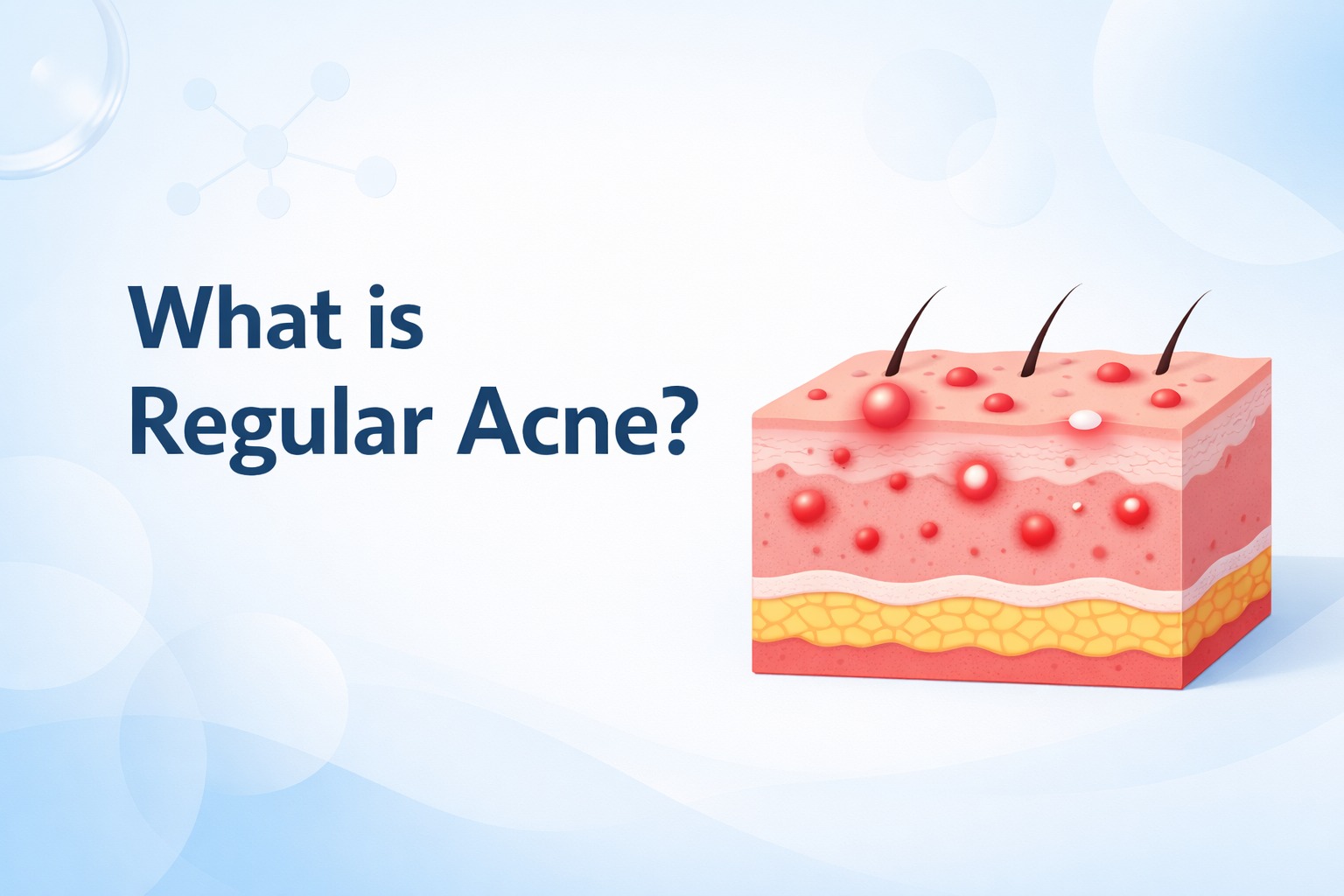
Regular acne, clinically known as acne vulgaris, is the most widespread skin condition worldwide. It is a surface-level issue that happens when the tiny hair follicles (pores) on your skin become blocked. While it can be annoying, it is typically straightforward to treat once you understand the mechanics.
Regular breakouts are usually triggered by a combination of three main factors:
Regular acne presents in a variety of ways. You will commonly see blackheads (open clogged pores), whiteheads (closed clogged pores), or small, tender red bumps. They can appear anywhere on your face, shoulders, or back, but on the face, they frequently cluster in the T-zone—your forehead, nose, and chin—where oil production is naturally the highest.
Hormonal acne is an entirely different beast. Unlike regular acne, which is mostly a surface-level clogging issue, hormonal acne is driven by internal fluctuations within your body’s endocrine system. It is incredibly common in adults; even if you had flawless skin as a teenager, you can still develop severe hormonal breakouts in your 20s, 30s, 40s, or beyond.
Hormonal acne is directly tied to fluctuations in hormones like estrogen, progesterone, and especially androgens (like testosterone). These shifts can be triggered by:
When androgen levels rise, they signal your oil glands to go into overdrive. This excess oil is thicker and stickier, creating deep blockages that regular cleansers simply cannot reach.
Hormonal acne rarely takes the form of simple blackheads. Instead, it manifests as painful, deep, cystic nodules under the skin that throb and refuse to come to a “head.” It has a very specific geographical preference, typically appearing on the lower third of the face, including the jawline, chin, lower cheeks, and upper neck.
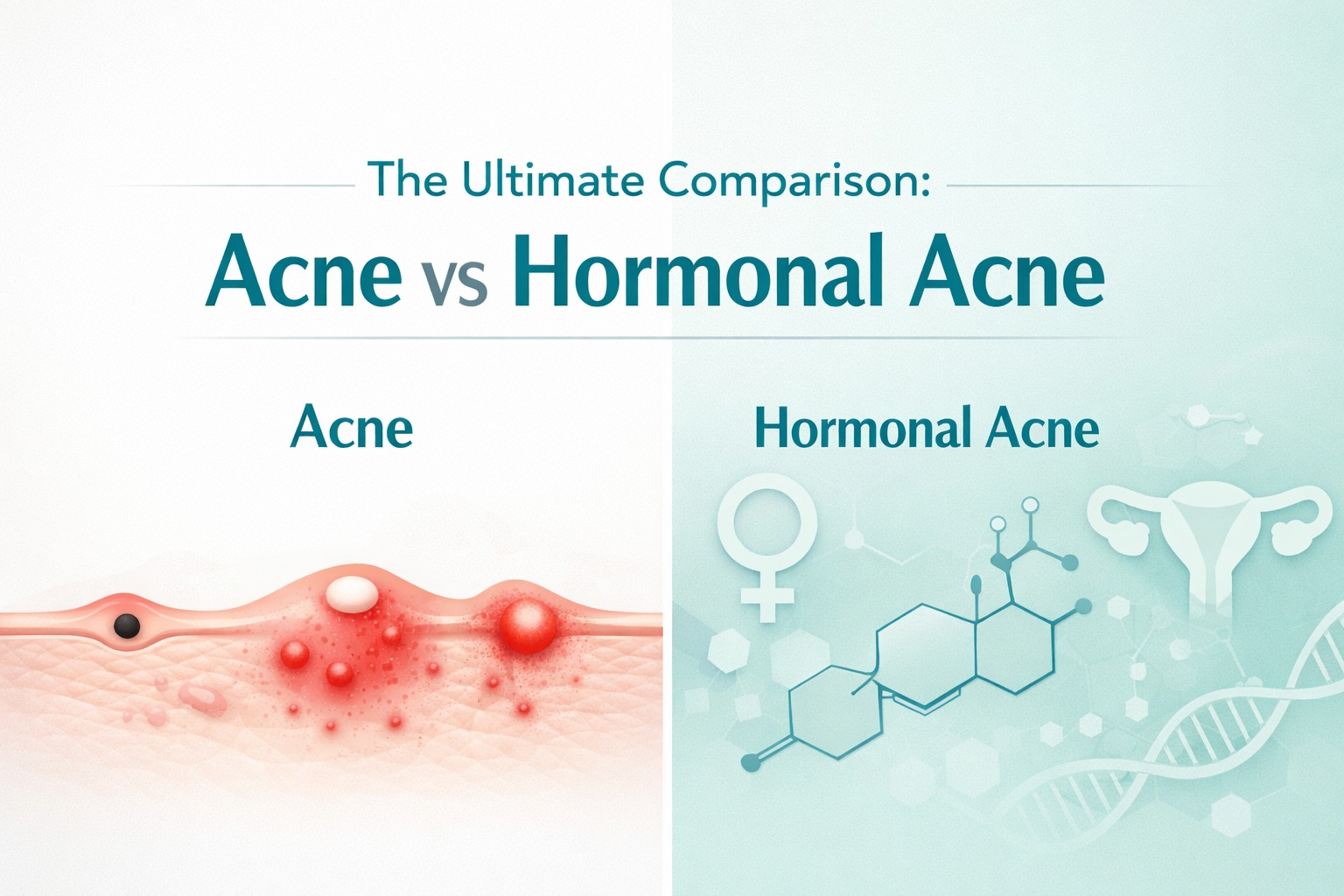
To make it easy to understand your skin, here is a breakdown of the key differences. This can help you decide if it is time to consult a skin specialist in Thane for an advanced evaluation.
Feature | Regular Acne | Hormonal Acne |
Primary Location | Mostly on the T-zone (forehead, nose, chin), back, and chest. | Concentrated on the lower face (jawline, chin, lower cheeks, neck). |
Physical Appearance | Surface-level blackheads, whiteheads, and small red pustules. | Deep, painful, inflamed cysts or blind pimples under the skin. |
Timing & Triggers | Triggered by sweat, heavy makeup, poor hygiene, or humid weather. | Flares up cyclically, often worsening the week before your period. |
Target Age Group | Most common in teenagers going through puberty, but affects all ages. | Highly prevalent in adult women in their 20s, 30s, and 40s. |
If you resonate more with the right side of this table, over-the-counter spot treatments will likely just dry out your skin without fixing the problem. It is highly recommended to seek the expertise of the best skin specialist in thane for a targeted, medical-grade treatment plan.
A common misconception is that chocolate or greasy food directly causes pimples. While one slice of pizza will not ruin your face, your overall diet does impact inflammation. High-glycemic foods (like sugary drinks and white bread) can spike your blood sugar, which in turn spikes insulin and androgen hormones, worsening hormonal acne. Managing your stress levels, getting adequate sleep, and maintaining a balanced diet are fantastic supporting habits, but they are rarely enough to cure severe hormonal cystic acne on their own.
Often, hormonal imbalances like PCOS do not just cause acne; they also lead to other frustrating symptoms like hirsutism (unwanted facial or body hair). If you are battling concurrent skin and hair issues, our clinic is fully equipped to help.
For patients looking for a safe, medical-grade, and permanent solution to unwanted hair, we are proud to be a highly-rated laser hair removal clinic. Dr. Nikita Patel utilizes state-of-the-art technology tailored to Indian skin types to ensure smooth, pain-free results. If you are currently browsing online for a safe laser treatment for hair removal, you can trust our clinic to provide personalized, dermatologist-led care. Treating the skin holistically—addressing both the acne and the hair growth—is what truly sets our practice apart.
Constantly experimenting with different skincare acids and abrasive scrubs can severely damage your skin barrier, leading to premature aging and hyperpigmentation. If your acne is painful, leaves dark brown spots, or causes pitted scars, you need medical intervention.
Finding a highly qualified skin specialist doctor in thane can save you years of frustration and wasted money. A proper medical consultation involves:
At Clear Skin Clinic, Dr. Nikita Patel is known for her compassionate, detail-oriented approach. Patients continually review her as the best skin specialist in thane because she takes the time to listen, educates you about your skin, and believes in treating the root cause rather than just masking the symptoms.
When a sudden, painful breakout strikes right before an important event, your first instinct is likely to open your phone and search for a skin specialist near me or the best skin specialist near me It is vital to look beyond just the proximity; you want a doctor with stellar patient reviews, verified credentials, and a modern, hygienic clinic setup.
If you are dealing with a severe, throbbing cyst that needs a quick cortisone injection to reduce swelling, you might find yourself urgently searching for a skin specialist near me open now Clear Skin Clinic is strategically and centrally located, making it incredibly accessible for residents across the city. As a trusted nearby skin specialist doctor Dr. Nikita Patel ensures that every single patient walks out of the clinic with a clear, actionable roadmap for healthier, more resilient skin.
You don't need to choose a procedure before your appointment.
Start with your concern. Your consultation is designed to understand your skin or hair, establish a diagnosis, and discuss the treatment options appropriate for you.