- +91 98673 70009
- drnikitappatel@gmail.com
- Mon–Sat, 10:00 AM – 7:30 PM

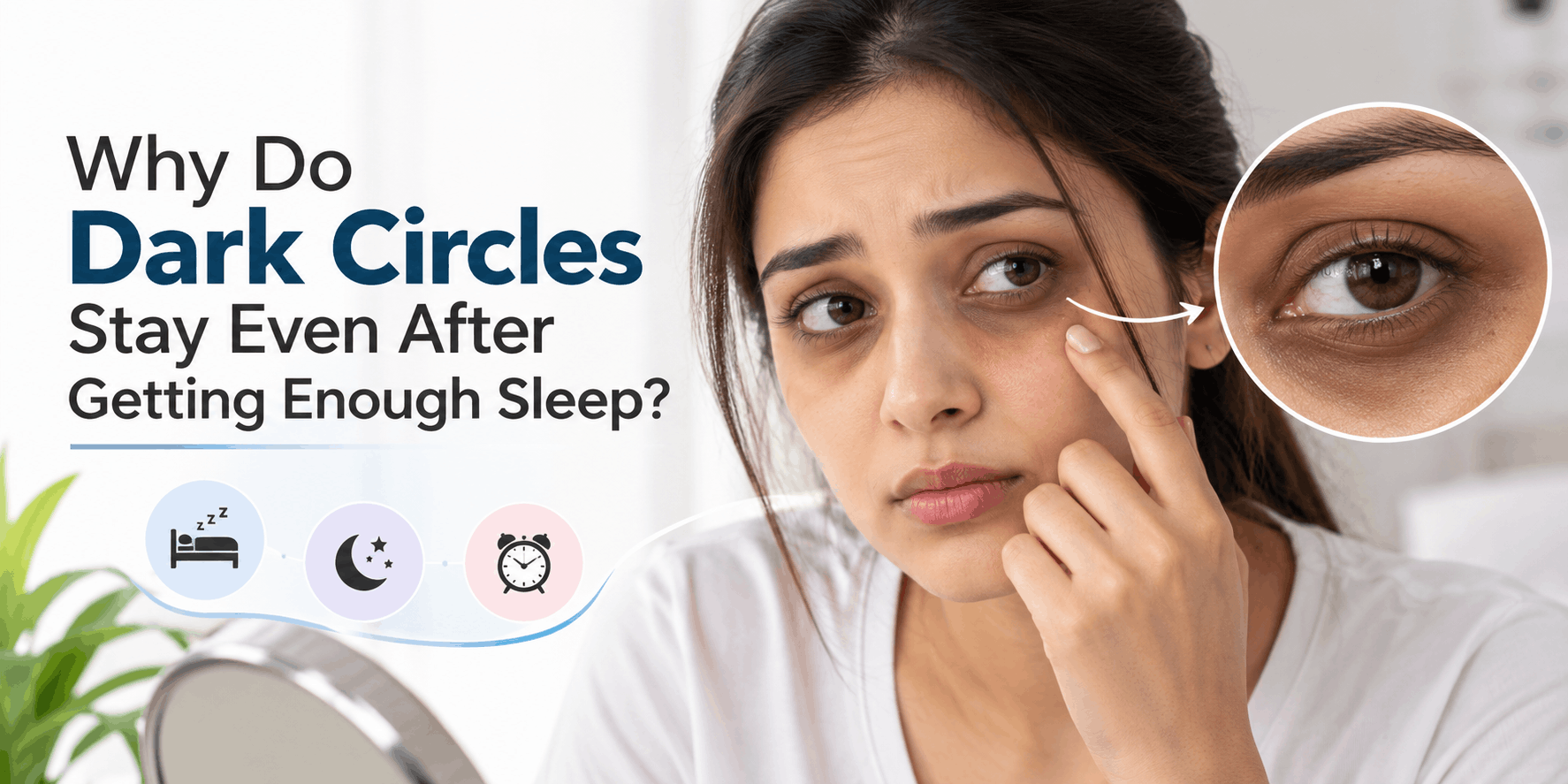
Why Do Dark Circles Stay Even After Getting Enough Sleep? This is a common question among people who follow a healthy sleep routine but still notice dark, tired-looking skin under their eyes. Although lack of sleep can make dark circles more noticeable, it is not the only reason they appear.
Dark circles can be linked to genetics, pigmentation, allergies, dehydration, sun exposure, ageing, and the natural structure of the skin around the eyes. Finding the actual cause is important because the right treatment depends on what is causing the darkness.
If your dark circles continue for a long time, consulting a Best Dermatologist In Thane can help you understand the condition and choose an appropriate treatment approach.
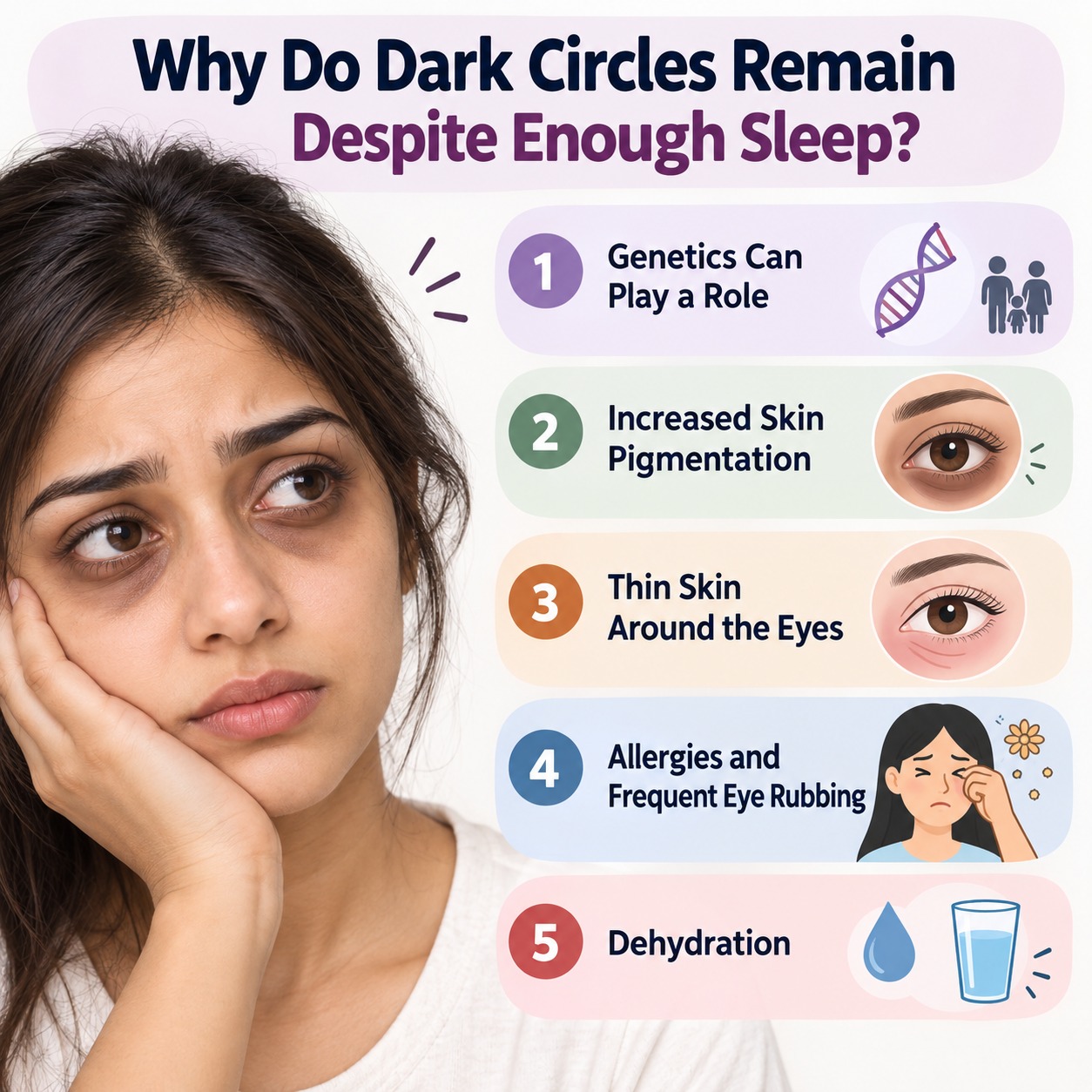
Getting 7–9 hours of sleep every night supports healthy skin, but it cannot prevent every type of dark circle. Several factors can affect the appearance of the under-eye area.
Some people naturally have darker skin around their eyes because of their genes. If dark circles are common among your parents or other family members, you may be more likely to develop them too.
Genetic dark circles can remain even when you sleep well, eat a balanced diet, and follow a regular skincare routine.
Extra melanin around the eyes can make the skin appear brown or darker than the surrounding area. This is particularly common in people who are prone to pigmentation.
Sun exposure can also increase melanin production. Regular use of suitable sun protection can help reduce additional pigmentation caused by ultraviolet exposure.
The skin under the eyes is thinner than skin in many other parts of the body. Because of this, blood vessels underneath the skin can sometimes become more visible.
This may create a blue, purple, or darker appearance. In such cases, getting additional sleep may not make the dark circles disappear.
Allergies can cause itching, watery eyes, redness, and irritation. When a person frequently rubs their eyes, the delicate skin can become irritated and may gradually look darker.
If your dark circles occur along with itching or watery eyes, speak with a qualified skin specialist in Thane to determine whether allergies or another skin condition could be contributing to the problem.
When the body does not receive enough fluids, the skin can look dry, dull, and less healthy. Dehydration may make existing dark circles appear more prominent.
Drinking enough water throughout the day and maintaining a balanced diet can support overall skin health. However, hydration alone may not correct dark circles caused by pigmentation or genetics.
Yes. Ageing naturally changes the skin around the eyes. Collagen and elasticity may decrease over time, causing the skin to become thinner.
Changes in the fat and tissues around the eyes can also create hollows or shadows. These shadows may look like dark circles even when the skin itself is not heavily pigmented.
A skin specialist doctor in thane can assess whether the darkness is mainly related to pigmentation, visible blood vessels, skin thinning, or facial shadows.
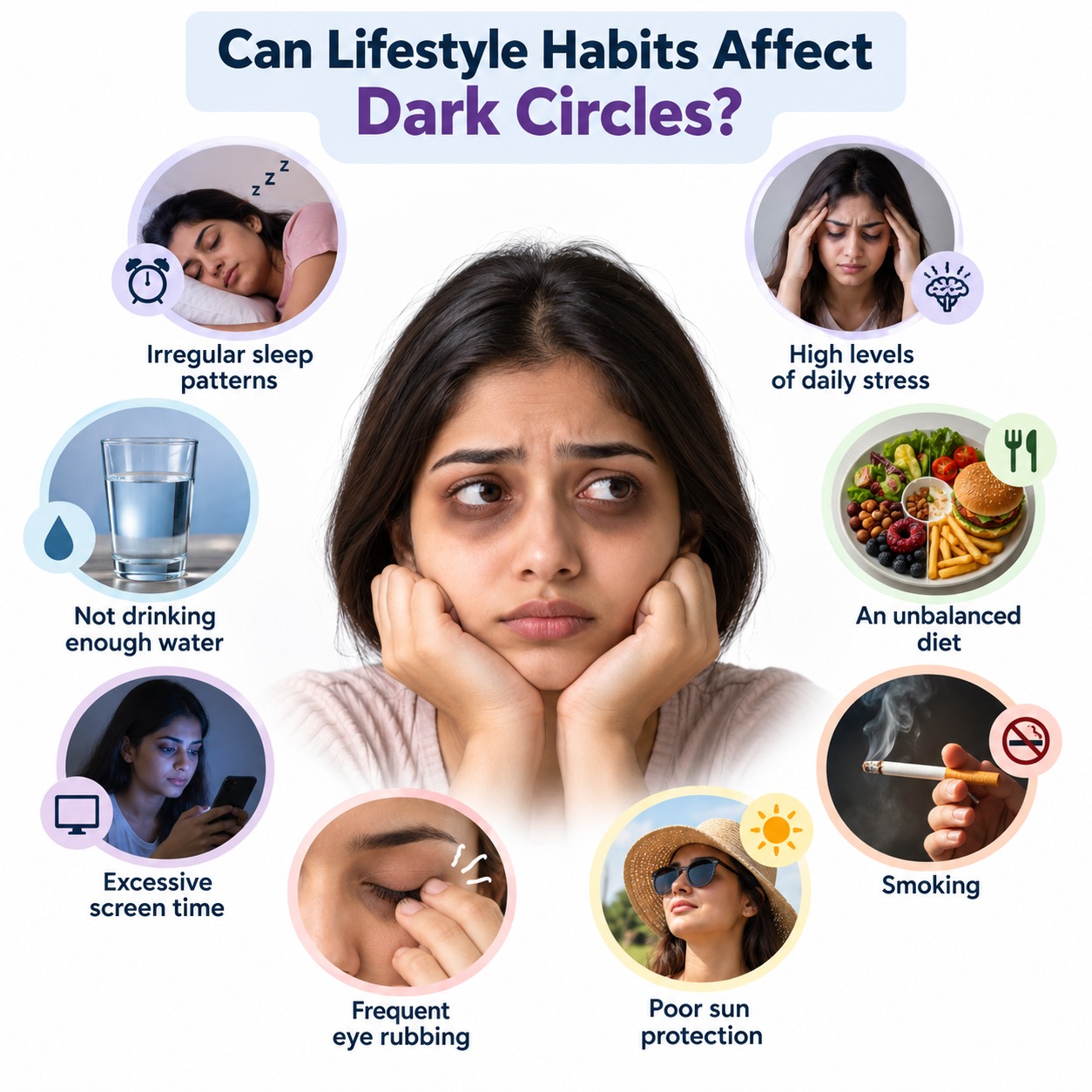
Yes. Although lifestyle habits are not the only cause, they can affect how noticeable dark circles appear.
Some habits that may contribute to a tired-looking appearance include:
Making healthier lifestyle changes can support better-looking skin, but persistent dark circles may still need professional evaluation.
The treatment depends on the underlying cause. Some basic skincare and lifestyle habits may help improve the appearance of the under-eye area.
UV exposure can worsen pigmentation and contribute to premature skin ageing. Using sunscreen regularly and wearing sunglasses when outdoors can help protect the delicate skin around the eyes.
If your eyes feel itchy, avoid rubbing them repeatedly. If allergies are responsible for the itching, treating the underlying problem may help reduce irritation.
The skin around the eyes is delicate. Avoid applying harsh products or untested home remedies close to the eyes.
If you are looking for a nearby skin specialist doctor a professional consultation can help you understand which products or treatments are suitable for your skin.
There is no single treatment that works for every type of dark circle. A dermatologist first needs to identify the main cause.
Depending on the condition, treatment may include suitable topical skincare products, sunscreen, treatments for pigmentation, chemical peels, laser-based procedures, or other dermatological approaches.
The treatment should be selected according to your skin type, pigmentation pattern, age, and the underlying cause of the dark circles.
People searching for the best skin specialist in thane should consider the dermatologist’s qualifications, experience, treatment approach, and suitability for their specific concern rather than choosing a treatment based only on advertisements.
Eye creams may improve the appearance of the under-eye area in some people, depending on the ingredients and the reason for the dark circles.
However, creams cannot correct every type of under-eye darkness. For example, dark circles caused mainly by hollowness or facial shadows may not respond significantly to topical skincare.
It is better to understand the cause before investing in multiple products.
Sometimes people experience multiple skin and hair concerns at the same time. If you are also dealing with excessive hair shedding or thinning, professional assessment can help identify the possible cause.
You can learn more about best hair loss treatment options at the clinic’s dedicated service page:
For local clinic information and directions, you can also check the best hair loss clinic location here:
Dark circles are usually not a serious medical problem, but persistent or sudden changes should not always be ignored.
Consider consulting a dermatologist if:
A dermatologist can examine the skin and determine whether pigmentation, allergies, ageing, genetics, or another factor is responsible.
If convenience is important, searching for a best skin specialist in thane can help you identify clinics available in your local area.
Before booking an appointment, check the doctor’s qualifications, experience, areas of dermatology expertise, and the treatments offered at the clinic.
Avoid choosing a treatment simply because it worked for someone else. Different causes of dark circles can require completely different approaches.
If you are comparing options for the best skin specialist near me focus on professional qualifications and whether the doctor provides an evaluation before recommending treatment.
For people who need a consultation outside usual working hours, checking for a skin specialist near me open now may also be useful.
Dark circles can remain even when you get enough sleep because sleep is only one part of the picture. Genetics, pigmentation, allergies, dehydration, sun exposure, ageing, thin skin, and facial structure can all affect the appearance of the under-eye area.
Instead of assuming that tiredness is the only cause, it is useful to identify what is actually responsible for the darkness. A qualified dermatologist can examine your skin and recommend an approach based on your individual needs.
For persistent dark circles or other skin concerns, Dr. Nikita Patel can help you understand your condition and explore suitable dermatological care in Thane.
You don't need to choose a procedure before your appointment.
Start with your concern. Your consultation is designed to understand your skin or hair, establish a diagnosis, and discuss the treatment options appropriate for you.