- +91 98673 70009
- drnikitappatel@gmail.com
- Mon–Sat, 10:00 AM – 7:30 PM

Summer is the season when many people notice dark patches, tanning, uneven skin tone, and dullness on their skin. If you are wondering, Why Does Skin Pigmentation Increase in Summer?, the main reason is increased exposure to harmful UV rays from the sun. During summer, the skin produces more melanin to protect itself from sun damage, which leads to pigmentation problems.
Pigmentation can affect anyone, especially people who spend more time outdoors without proper sun protection. Consulting a skilled skin expert like Dr. Nikita Patel can help you manage and treat pigmentation effectively. If you are searching for the Best Dermatologist In Thane or a trusted skin specialist in Thane professional guidance can make a big difference in maintaining healthy and glowing skin.
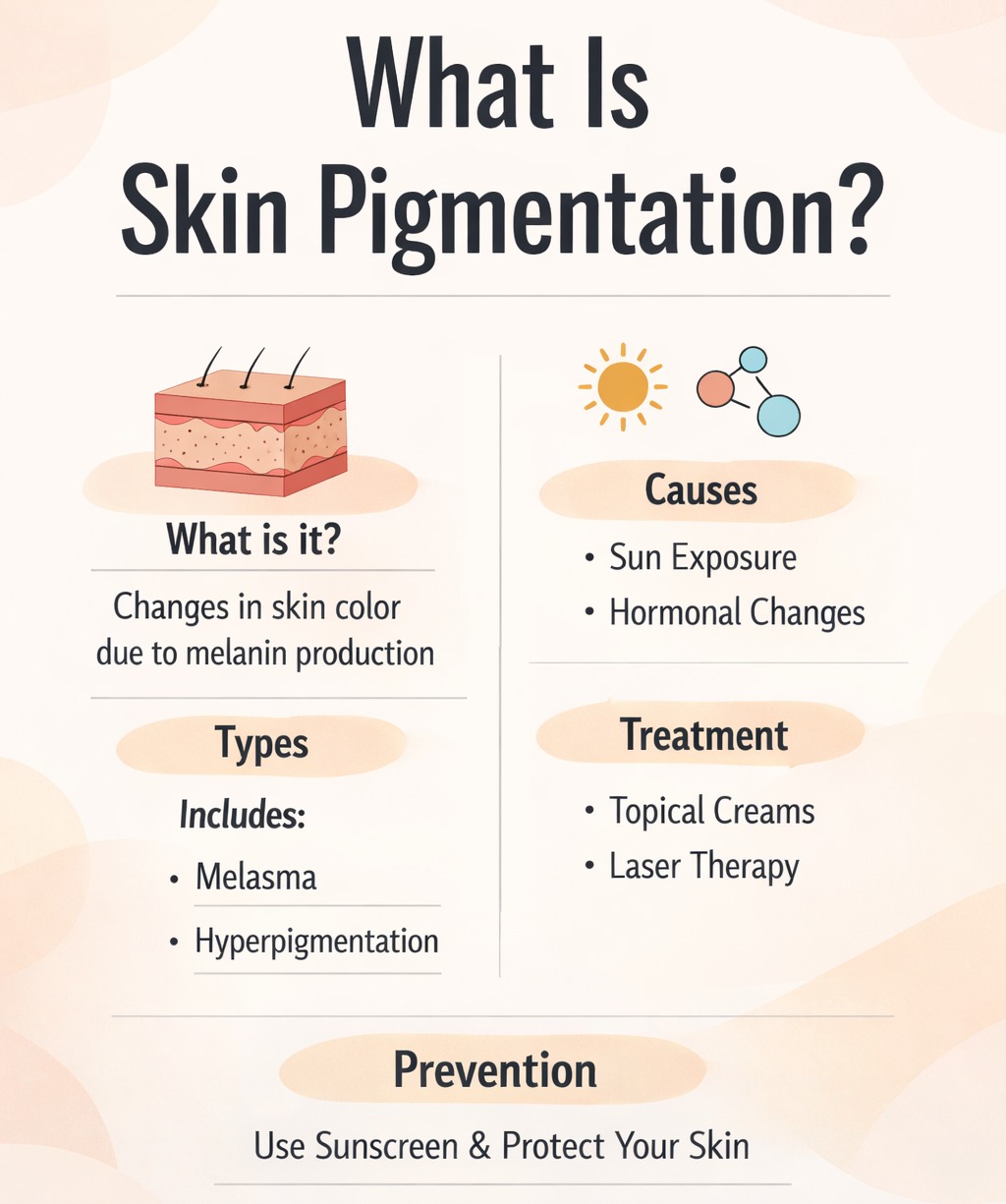
Skin pigmentation refers to the color of your skin. Melanin is the pigment responsible for skin color. When melanin production becomes uneven or excessive, dark spots, patches, or tanning may appear on the skin.
Pigmentation can happen due to several reasons such as:
Summer weather often worsens these conditions because the skin gets exposed to intense sunlight and humidity.
The biggest reason for pigmentation during summer is ultraviolet (UV) radiation. UV rays stimulate melanocytes, the cells that produce melanin. Excess melanin production leads to dark spots and tanning.
Even short periods of sun exposure without sunscreen can trigger pigmentation issues.
Heat can increase inflammation in the skin. Conditions like melasma and post-inflammatory pigmentation often become worse during hot weather.
People with sensitive skin may notice more redness, irritation, and uneven skin tone in summer.
Sweat mixed with dirt and oil can clog pores and irritate the skin. This irritation may cause acne breakouts, which later leave dark marks and pigmentation behind.
Summer heat can also affect hormonal balance in some individuals, especially women. Hormonal pigmentation like melasma may become darker when exposed to sunlight.
Skipping sunscreen or not reapplying it regularly increases the risk of sun damage. Without proper protection, pigmentation can develop faster and become difficult to treat.
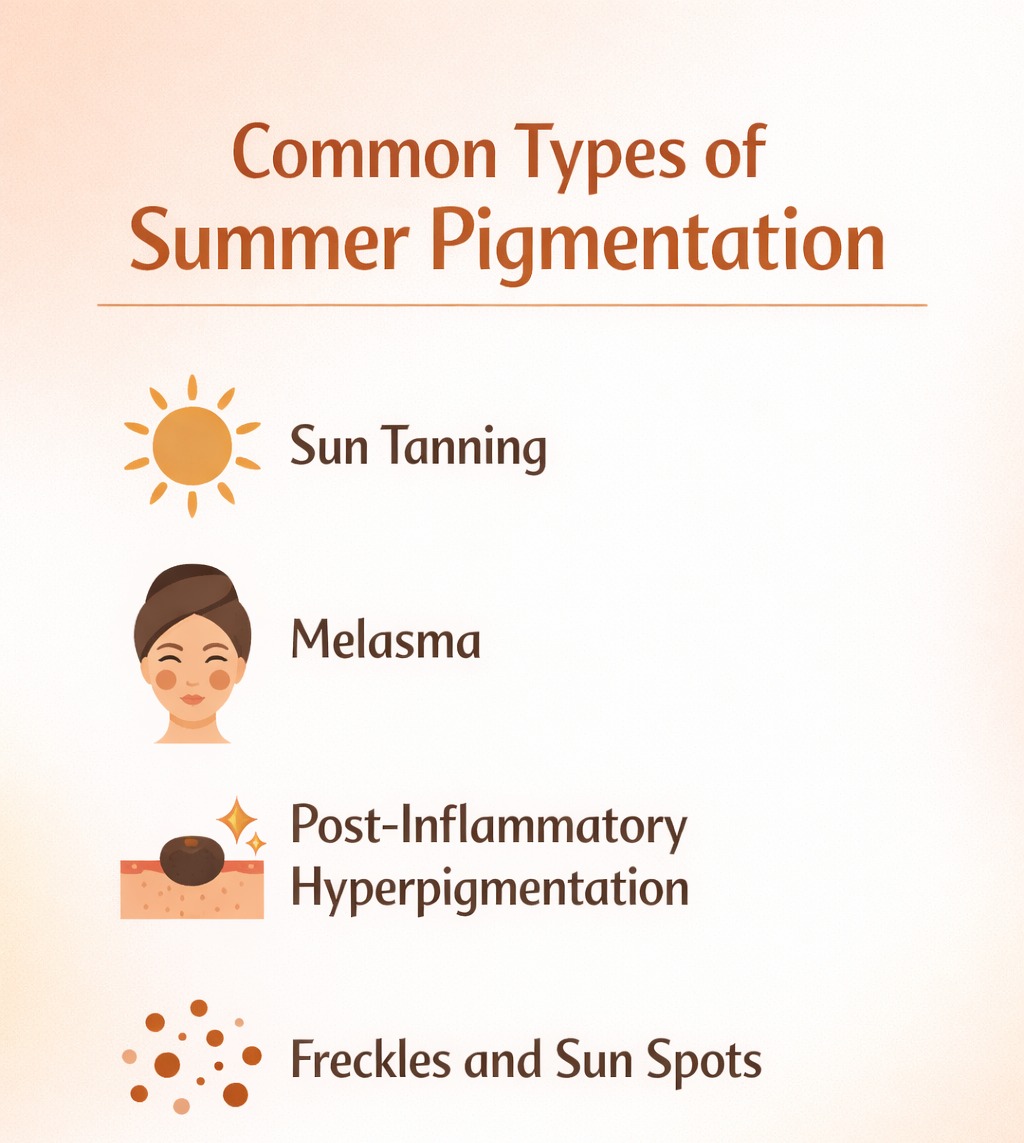
Tanning is the most common summer pigmentation issue. It happens when the skin produces extra melanin to protect itself from UV rays.
Melasma appears as brown or gray patches, mainly on the cheeks, forehead, and upper lip. Sun exposure makes this condition worse.
Dark spots left after acne, rashes, or skin injuries are called post-inflammatory hyperpigmentation.
Some people develop freckles or sun spots due to prolonged exposure to sunlight over time.
Apply a broad-spectrum sunscreen with SPF 30 or higher every day. Reapply every 2-3 hours if you are outdoors.
This is one of the most important steps to prevent pigmentation.
Use sunglasses, hats, scarves, and full-sleeve clothing to protect your skin from direct sunlight.
Drink enough water to keep your skin healthy and hydrated during hot weather.
Try to avoid going out between 11 AM and 4 PM when UV rays are strongest.
Use gentle cleansers, antioxidant serums, and moisturizers suitable for your skin type.
Avoid harsh scrubs or chemical products that can irritate the skin.
If pigmentation becomes severe, professional treatment from a dermatologist may be needed.
Chemical peels help remove dead skin cells and reduce dark spots.
Laser therapy targets excess melanin and improves skin tone effectively.
Medical-grade facials can brighten the skin and reduce tanning.
Dermatologists may prescribe creams containing ingredients like kojic acid, retinoids, or vitamin C for pigmentation treatment.
If you are looking for a trusted skin specialist doctor in thane or searching online for a nearby skin specialist doctor expert consultation can help identify the right treatment for your skin type.
Follow these simple skincare habits during summer:
These small steps can help reduce pigmentation and maintain glowing skin.
You should consult a dermatologist if:
Many people search for the skin specialist near me or best skin specialist near me when dealing with persistent pigmentation issues. Early treatment can prevent pigmentation from becoming permanent.
For professional skincare consultation and advanced treatments, you can visit skin care clinic Thane.
You can also check the clinic location here: best skin clinic center thane
Now you know the answer to the question, Why Does Skin Pigmentation Increase in Summer? Excessive sun exposure, heat, sweating, and lack of skincare are the main causes of pigmentation during hot weather.
Taking preventive measures like using sunscreen, staying hydrated, and following a proper skincare routine can help protect your skin. For advanced care and professional treatment, consulting Dr. Nikita Patel is the best way to achieve healthy and even-toned skin.
If you are searching for the best skin specialist in thane or a reliable skin specialist near me open now expert dermatology care can help you manage pigmentation safely and effectively.
You don't need to choose a procedure before your appointment.
Start with your concern. Your consultation is designed to understand your skin or hair, establish a diagnosis, and discuss the treatment options appropriate for you.