- +91 98673 70009
- drnikitappatel@gmail.com
- Mon–Sat, 10:00 AM – 7:30 PM
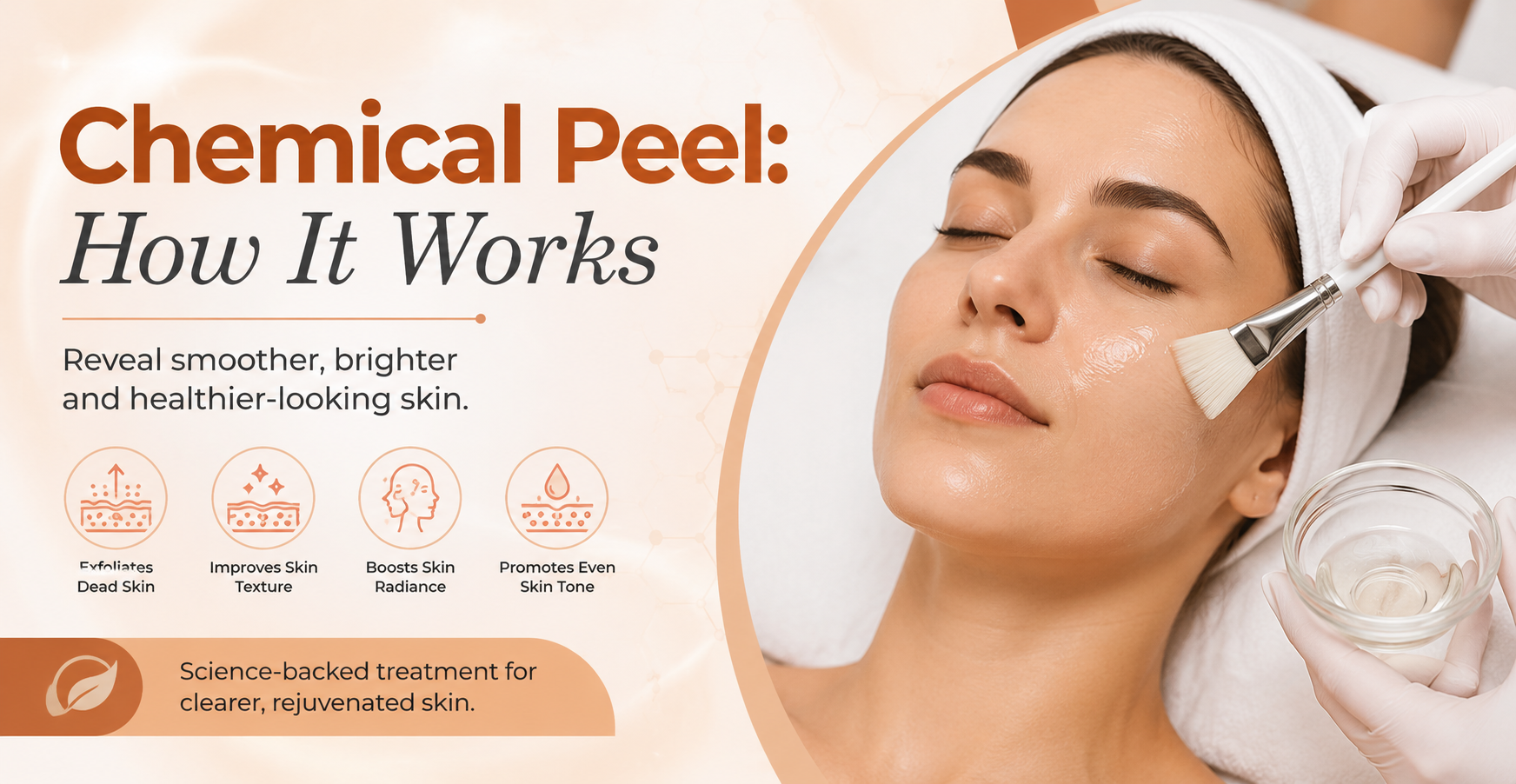
Chemical peels are popular dermatology treatments used to improve the appearance and texture of the skin. But Chemical Peel: How it works is a common question for people considering this treatment. A chemical peel uses a specially selected solution to remove damaged outer layers of the skin and support the growth of newer, healthier-looking skin. Depending on the type of peel, it may help with acne, pigmentation, uneven skin tone, sun damage, fine lines, and rough skin texture.
If you are considering a chemical peel, a dermatologist such as Dr Nikita Patel can assess your skin and recommend an appropriate treatment based on your skin type and concerns.
A chemical peel is a skin treatment in which a controlled chemical solution is applied to the skin. The solution causes the outer damaged skin cells to exfoliate and eventually shed. As the skin heals, newer skin develops, which can make the treated area look smoother and more even.
Chemical peels can vary in strength. Superficial peels affect the outermost layer of skin, while medium and deep peels work at greater depths. The choice depends on the skin concern, desired result, skin sensitivity, and overall health of the skin.
The process starts with a consultation and skin assessment. The dermatologist examines the skin and chooses a suitable peeling agent and strength.
During treatment, the skin is cleansed before the chemical solution is carefully applied. The solution works by loosening or removing damaged skin cells. This controlled exfoliation encourages the skin’s natural renewal process.
After the treatment, the skin may become slightly red, dry, tight, or flaky. As the damaged outer cells shed, fresher skin becomes visible. The final result depends on the type of peel and the condition being treated.
Chemical peels may be used for several common skin concerns, including:
However, a chemical peel is not suitable for every skin problem. A dermatologist should determine whether it is appropriate for your particular condition.
A superficial peel works mainly on the outermost layer of the skin. It is commonly used to improve mild pigmentation, dullness, uneven texture, and some acne-related concerns. Recovery is generally shorter than with deeper peels.
A medium peel reaches deeper into the skin and may be considered for more noticeable pigmentation, sun damage, fine lines, or certain superficial scars. It usually causes more redness and peeling than a superficial peel, so proper aftercare is important.
Deep peels affect deeper layers of the skin and are used for selected skin concerns. Because they produce a stronger effect, they require careful medical assessment and a longer recovery period. They should only be performed under appropriate professional supervision.
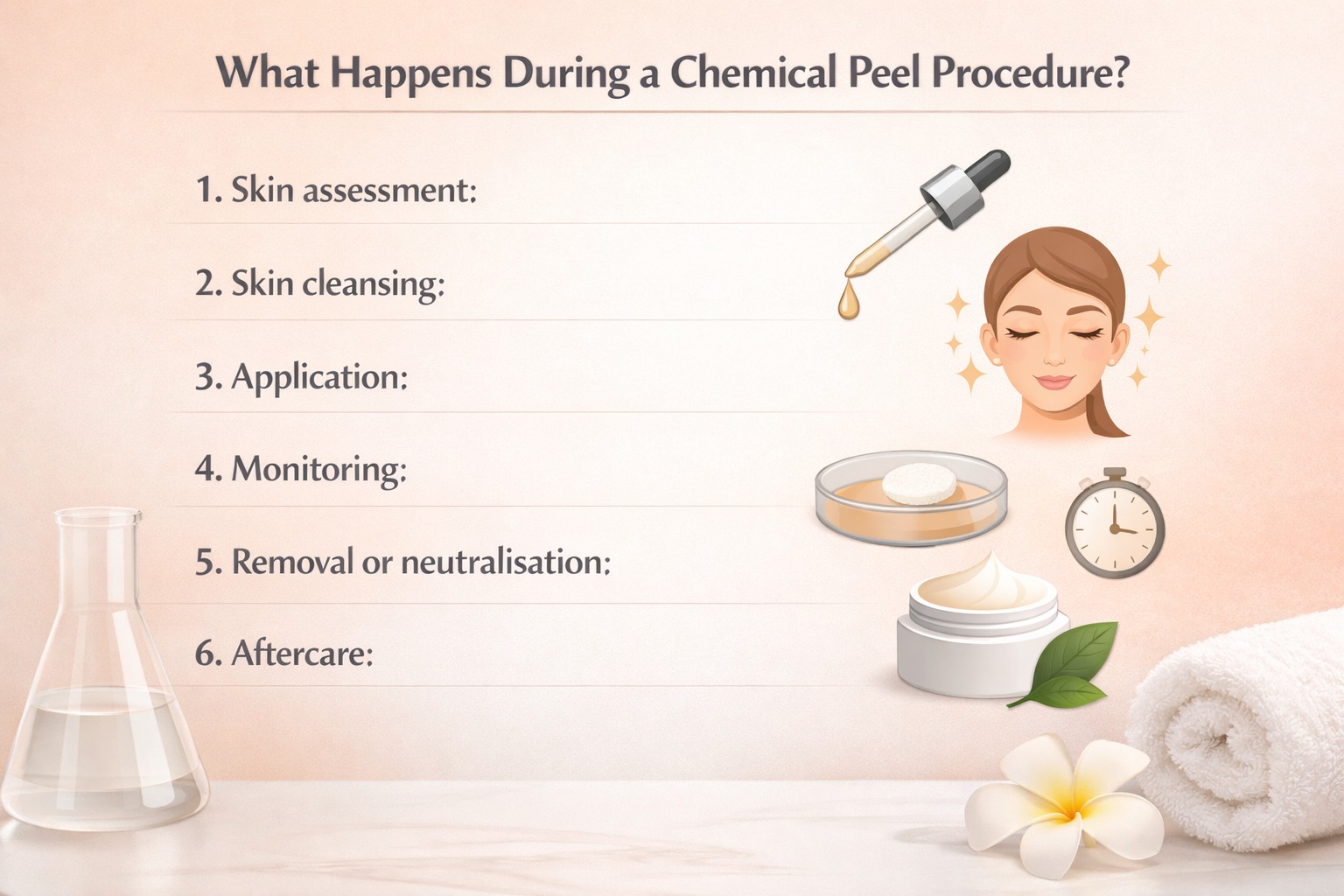
A typical chemical peel involves several steps:
The exact procedure can differ according to the type of peel being used.
The sensation depends on the type and strength of the peel. Many people experience mild tingling, warmth, tightness, or stinging during treatment. Stronger peels may cause more noticeable discomfort.
Your dermatologist can explain what sensation to expect and how discomfort can be managed. It is important not to use a strong chemical peel at home without professional guidance.
After treatment, temporary redness, dryness, tightness, or peeling can occur. These effects vary depending on the depth of the peel.
The skin may gradually become smoother and more even as it recovers. Avoid picking or pulling peeling skin because this can irritate the skin and potentially increase the risk of marks.
Following the dermatologist’s aftercare instructions can help support proper healing.
Results depend on the type of chemical peel and the skin concern being treated. Some superficial peels may produce a fresher appearance after the skin has recovered, while deeper treatments can require more recovery time.
Some people may need multiple sessions to achieve their desired improvement. The number and frequency of treatments should be decided by a qualified dermatologist after assessing the skin.
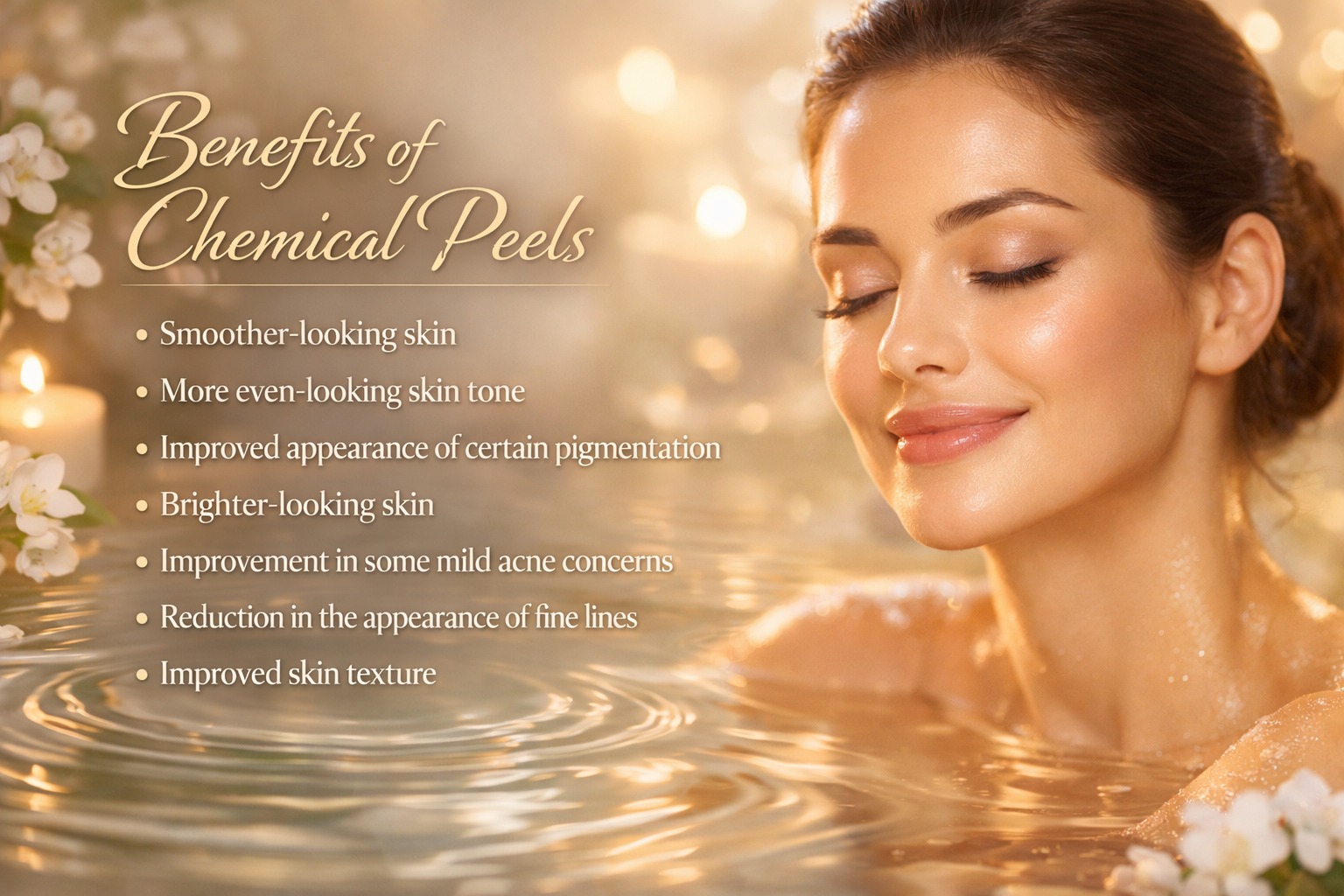
Potential benefits include:
Results are not identical for everyone, and chemical peels do not permanently prevent future acne, pigmentation, or signs of ageing.
People with concerns such as uneven skin tone, mild pigmentation, acne, rough texture, or sun damage may be candidates for a chemical peel.
However, suitability depends on several factors, including skin type, sensitivity, current skin condition, medications, previous treatments, and the desired outcome. A professional skin assessment is important before treatment.
A chemical peel may need to be delayed if the skin has an active infection, open wounds, significant irritation, or severe inflammation.
Certain medicines and recent cosmetic treatments may also affect whether a peel is appropriate. Pregnancy or breastfeeding can require additional consideration depending on the peeling agent being used.
For this reason, always tell your dermatologist about your current medications, skincare products, allergies, and recent treatments before undergoing a peel.
Proper aftercare is an important part of the treatment. Some useful precautions include:
Sun protection is particularly important because recently treated skin can be more sensitive.
Chemical peels can be safe when the appropriate treatment is selected and performed correctly. However, side effects such as redness, irritation, dryness, peeling, temporary pigmentation changes, or other complications can occur.
The risk may increase when strong chemical solutions are used incorrectly. Professional assessment is especially important for people with sensitive skin or a history of pigmentation problems.
If you are searching for a dermatologist in Thane, consulting a qualified skin specialist such as Dr Nikita Patel can help you understand whether a chemical peel is suitable for your skin.
A chemical peel is different from a regular facial because it involves a medically selected chemical solution designed to produce controlled exfoliation.
Microdermabrasion uses mechanical exfoliation, while laser resurfacing uses laser energy to affect the skin. Each treatment has different benefits, limitations, recovery periods, and suitability.
A dermatologist can recommend the most appropriate option based on your skin concern rather than simply choosing the most popular treatment.
Chemical peels work by producing controlled exfoliation of damaged skin layers and supporting the skin renewal process. Depending on the type of peel, they may help improve pigmentation, acne, uneven skin tone, rough texture, sun damage, and fine lines.
The best chemical peel is not necessarily the strongest one. The treatment should be selected according to your skin type, concerns, and medical history. If you are considering a chemical peel, consult Dr Nikita Patel for a professional skin assessment and personalised treatment advice.
A chemical peel applies a controlled chemical solution that removes or loosens damaged outer skin cells. As the skin recovers, newer skin develops, which can improve its appearance and texture.
Recovery depends on the depth of the peel. Superficial peels generally have less downtime, while medium and deep peels can require longer recovery. Your dermatologist can provide a more specific recovery timeline.
Chemical peels may improve the appearance of certain dark spots, but pigmentation can return depending on sun exposure, hormones, skin conditions, and other factors. Consistent sun protection is important.
Certain superficial chemical peels may help improve acne and related skin concerns. However, the appropriate peel depends on the type and severity of acne.
The recommended frequency depends on the type of peel, skin condition, and treatment goals. Avoid repeating treatments too frequently without professional advice.
Some skincare products may need to be temporarily stopped after treatment, particularly harsh exfoliants and irritating active ingredients. Follow the specific aftercare instructions provided by your dermatologist.
You don't need to choose a procedure before your appointment.
Start with your concern. Your consultation is designed to understand your skin or hair, establish a diagnosis, and discuss the treatment options appropriate for you.