- +91 98673 70009
- drnikitappatel@gmail.com
- Mon–Sat, 10:00 AM – 7:30 PM
Introducing Clear Skin 360°
Treat acne the right way — not just the pimples, but the marks and scars they leave behind. Acne treatment is not a one-step process. It's a program.
Clear Skin 360° is our structured, dermatologist-led Acne Phase Program — active breakouts are controlled first, pigmentation is addressed next, and scars are treated only once your skin is ready for it.
03Phases
01Personalised Plan
MDDermatologist-Led
∞Maintenance Included

ADD PHOTO HERE
hero-model.jpg
Recommended: 900×1100px portrait, good lighting, skin clearly visible
hero-model.jpg
Recommended: 900×1100px portrait, good lighting, skin clearly visible
CLEAR, HEALTHY SKIN — THE GOAL OF EVERY PHASE
ADD PHOTO HERE
doctor-photo.jpg
Recommended: 800×1000px portrait
doctor-photo.jpg
Recommended: 800×1000px portrait
Meet Your Dermatologist
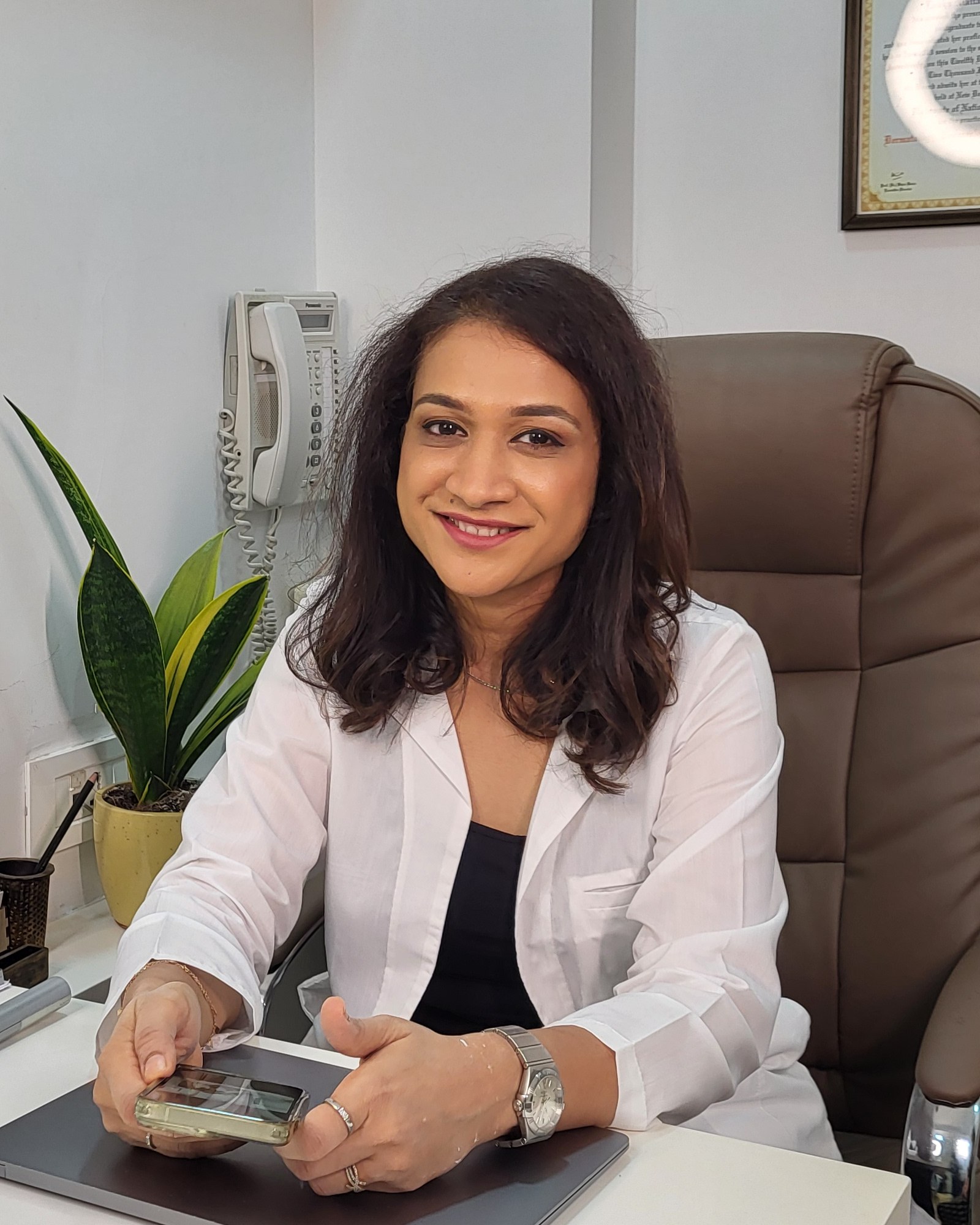
Meet Dr. Nikita Patel
MBBS, DNB (Dermatology) • Gold Medalist
Dr. Nikita Patel is a Gold Medalist DNB Dermatologist with 10+ years of experience in treating acne, acne scars, pigmentation, and laser dermatology. She has helped thousands of patients achieve healthier, clearer skin through evidence-based, personalized care.
Our Philosophy
Treat acne in the right order — not just the pimples.
Control active acne → Treat marks → Improve scars
Every treatment plan is tailored to your skin, concerns, and long-term goals.
10+Years Experience
🏅Gold Medalist DNB Dermatologist
1000sAcne Patients Treated
EBMEvidence-Based, Personalized Care
Real Results
See what a coordinated program can do
One patient's journey through Clear Skin 360° — active acne, pigmentation and scarring, all addressed in sequence.
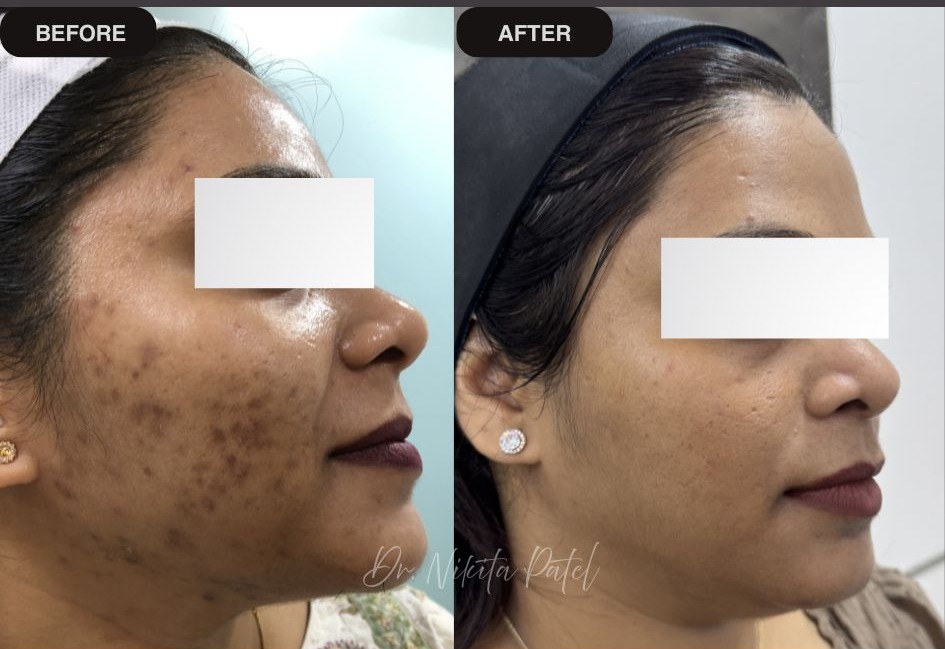
Visible improvement in acne, pigmentation and scars — achieved through the Clear Skin 360° phase-wise program. See more results ↓
Why Phase-Wise
Acne can leave behind more than pimples
Trying to treat scars while acne is still active can trigger repeated inflammation — and new scars. That's why we follow a simple three-phase system.
Repeated breakouts
Red or brown acne marks
Uneven skin texture
Open pores
Ice-pick, boxcar or rolling scars
Loss of confidence
The Program
Clear Skin 360° — three phases, one coordinated program
Clear Skin 360° isn't a single procedure — it's a structured program with defined phases, clear goals for each stage, and a dermatologist tracking your progress from the first consultation through to maintenance.
Every Clear Skin 360° enrollment includes
- Dermatologist consultation & diagnosis
- A written, phase-wise treatment plan
- Progress reassessment before each phase transition
- Clinical photography to track results objectively
- A post-program maintenance plan
Phase 1
Control Active Acne
First, we stop new acne from forming — reducing active pimples, oiliness and inflammation.
Start Phase 1Treatment may include
- Prescription creams
- Oral medications, when required
- Medical skincare
- Oil-control treatments
- Acne-specific chemical peels
- Lifestyle and skincare guidance
Goal of this phase
- Control active breakouts
- Reduce redness and inflammation
- Prevent new marks
- Reduce risk of further scarring
- Build a sustainable home-care routine
Phase 2
Treat Marks & Pigmentation
Once acne is controlled, we focus on the red, brown or dark marks it leaves behind — especially visible on Indian skin.
Explore Pigmentation TreatmentsTreatment may include
- Chemical peels
- Laser toning
- Medical facials
- Prescription pigmentation creams
- Barrier-repair skincare
- Sunscreen and maintenance treatment
May help
- Reduce post-acne pigmentation
- Improve uneven skin tone
- Calm residual inflammation
- Improve skin clarity
- Prepare the skin for scar treatment
Phase 3
Improve Acne Scars
Once acne is stable, we begin scar correction — combining treatments based on your specific scar pattern.
Book a Scar AssessmentTreatment options may include
- Subcision
- TCA CROSS
- Microneedling radiofrequency
- Fractional CO₂ laser
- Dermal fillers
- Regenerative treatments
Plan is designed around
- Scar type & depth
- Skin tone & pigmentation tendency
- Previous treatments
- Acceptable downtime
- Treatment goals
Self-Check
Which phase are you currently in?
I still have active pimples
Start with Phase 1: Acne Control
My acne is controlled, but I have dark marks
You may be ready for Phase 2
My acne is stable, but I have pits or texture
You may be ready for Phase 3
I have active acne, marks and scars together
We'll build you a step-by-step plan
Process
Your acne journey at Clear Skin Clinic
01
Detailed assessment
We assess severity, type, distribution, pigmentation, scarring and triggers.
02
Personalised plan
You get a phase-wise plan instead of random procedures.
03
Progress monitoring
Clinical photographs track improvement objectively.
04
Procedure planning
Peels, lasers and scar procedures introduced only when suitable.
05
Maintenance plan
We help you prevent relapses and maintain clearer skin.
Outcomes
Real patients. Real progress.
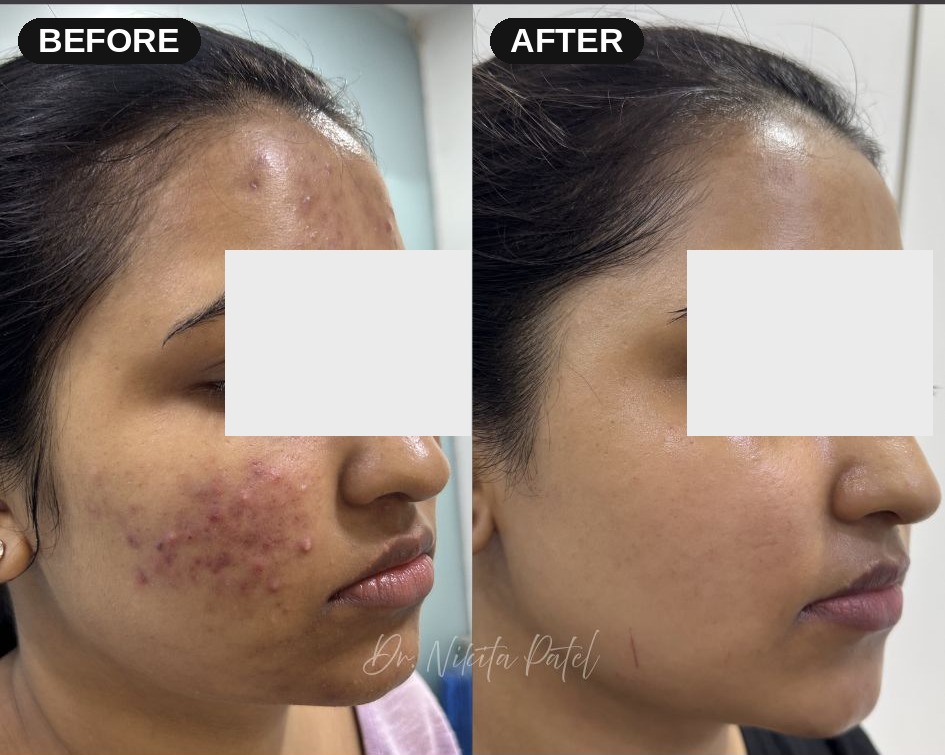
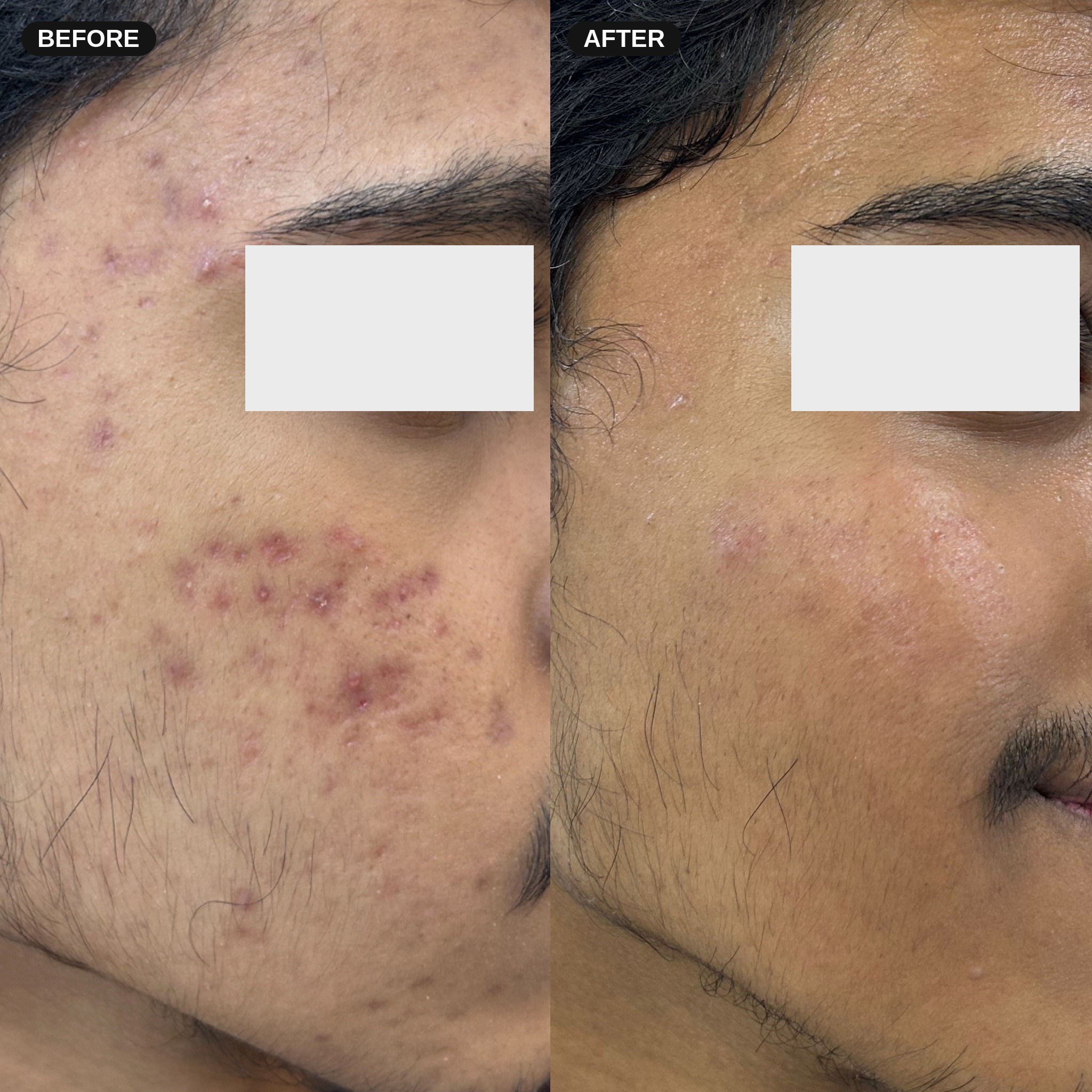
Acne Control
Reduction in active inflammatory acne after a personalised medical treatment plan.
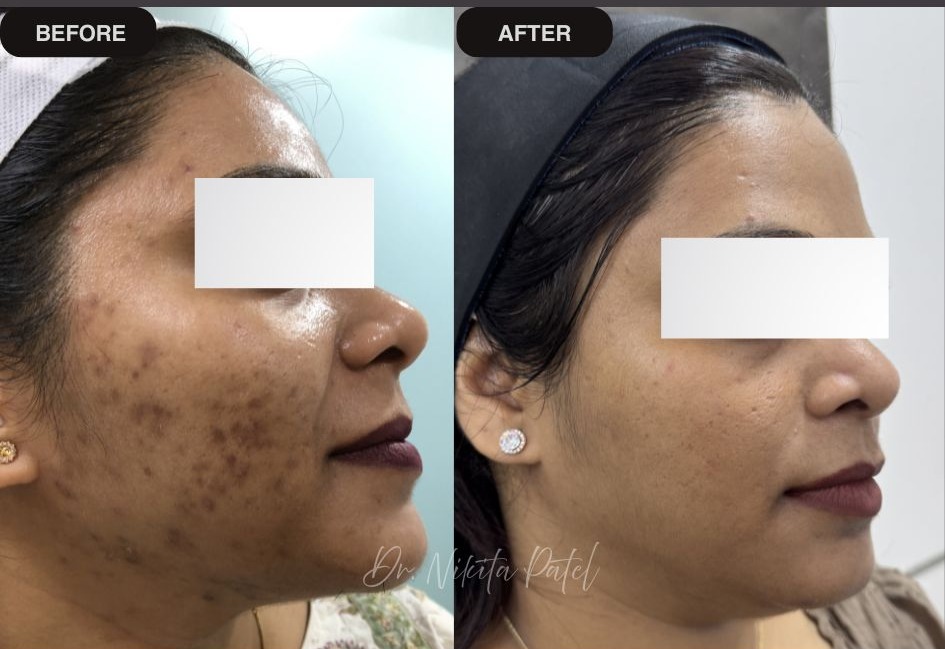
Pigmentation Improvement
Improvement in post-acne marks using medical skincare and clinic procedures.
Acne Scar Improvement
Visible improvement in scar depth and texture after combination treatment.
Results vary depending on acne severity, scar type, skin type, treatment adherence and number of sessions.
Acne is a multifactorial condition. Four processes drive it together, and each reinforces the next — which is exactly why single-step treatments so often fall short.
01 / SEBUM
Excess oil production
Androgen hormones stimulate sebaceous glands to produce more oil than the skin needs, creating a rich environment for clogging and bacterial growth.
02 / KERATIN
Follicular hyperkeratinization
Dead skin cells lining the follicle shed abnormally and stick together, blocking the pore instead of exiting the skin surface normally.
03 / MICROBIOME
C. acnes proliferation
The blocked, oil-rich follicle becomes low in oxygen — ideal conditions for Cutibacterium acnes bacteria to multiply.
04 / IMMUNE RESPONSE
Inflammation
The immune system reacts to bacterial byproducts, producing the redness, swelling and pain seen in active pimples — and, over time, tissue damage.
Contributing & Modulating Factors
These four processes don't occur in isolation. Several other factors influence how severe — and how persistent — acne becomes:
Genetics & family history
Hormonal fluctuation (including PCOS)
Stress
Diet & glycemic load
Comedogenic cosmetics
Humidity & pollution
Skin barrier dysfunction
Certain medications
Because these drivers act together, a treatment plan built around any single cause — oil control alone, or bacteria control alone — tends to give incomplete or temporary results. This is the clinical reasoning behind our phase system: each phase is designed to interrupt a different part of this cycle, at the point in your skin's healing where it can do the most good.
FAQ
Frequently asked questions
Active acne may begin improving within a few weeks, but consistent treatment is usually required for several months. Marks and scars require additional time.
Scar treatment is usually planned after active acne is reasonably controlled. Treating scars while new acne continues to form may give incomplete results.
No. Acne marks are usually red or brown colour changes. Acne scars cause changes in skin texture, such as pits, depressions or raised areas.
Many acne and pigmentation peels have little or no downtime. Mild dryness or flaking may occur depending on the peel used.
No. Laser treatment must be selected according to your diagnosis, skin tone and pigmentation pattern. A dermatologist should assess your skin first.
Most acne scars require multiple sessions and often a combination of treatments. The number of sessions depends on the scar type and expected level of improvement.
Acne scars can often be improved significantly, but complete removal may not always be possible. The aim is smoother texture, softer scar edges and more even-looking skin.
Acne can recur because it is influenced by hormones, oil production, genetics, stress and skincare. Maintenance treatment helps reduce relapses.
Why Clear Skin Clinic
Built around dermatologist-led planning
- Dermatologist-led acne treatment
- Personalised phase-wise planning
- Evidence-based medical care
- Treatments designed for Indian skin
- Advanced acne-scar procedures
- Clinical photography for progress tracking
- Focus on natural, realistic improvement
- Long-term maintenance guidance
Start With The Right Phase
Active acne, pigmentation or scars — know your priority first.
Don't choose a procedure simply because it's trending. Book a consultation and enroll in a personalised Clear Skin 360° program.
Get Started
Enroll in Clear Skin 360°
Answer a few quick questions and we'll get back to you with your personalised phase-wise program.
Visit Us
Find the clinic
Dr. Nikita Patel's Clear Skin Clinic — Panchpakhadi, Thane West.
Dr. Nikita Patel's Clear Skin Clinic
1, Amrutraj Society, Gurukul Road,
Opp. Janseva Sahakari Bank, Panchpakhadi,
Thane West, Thane, Maharashtra 400602