

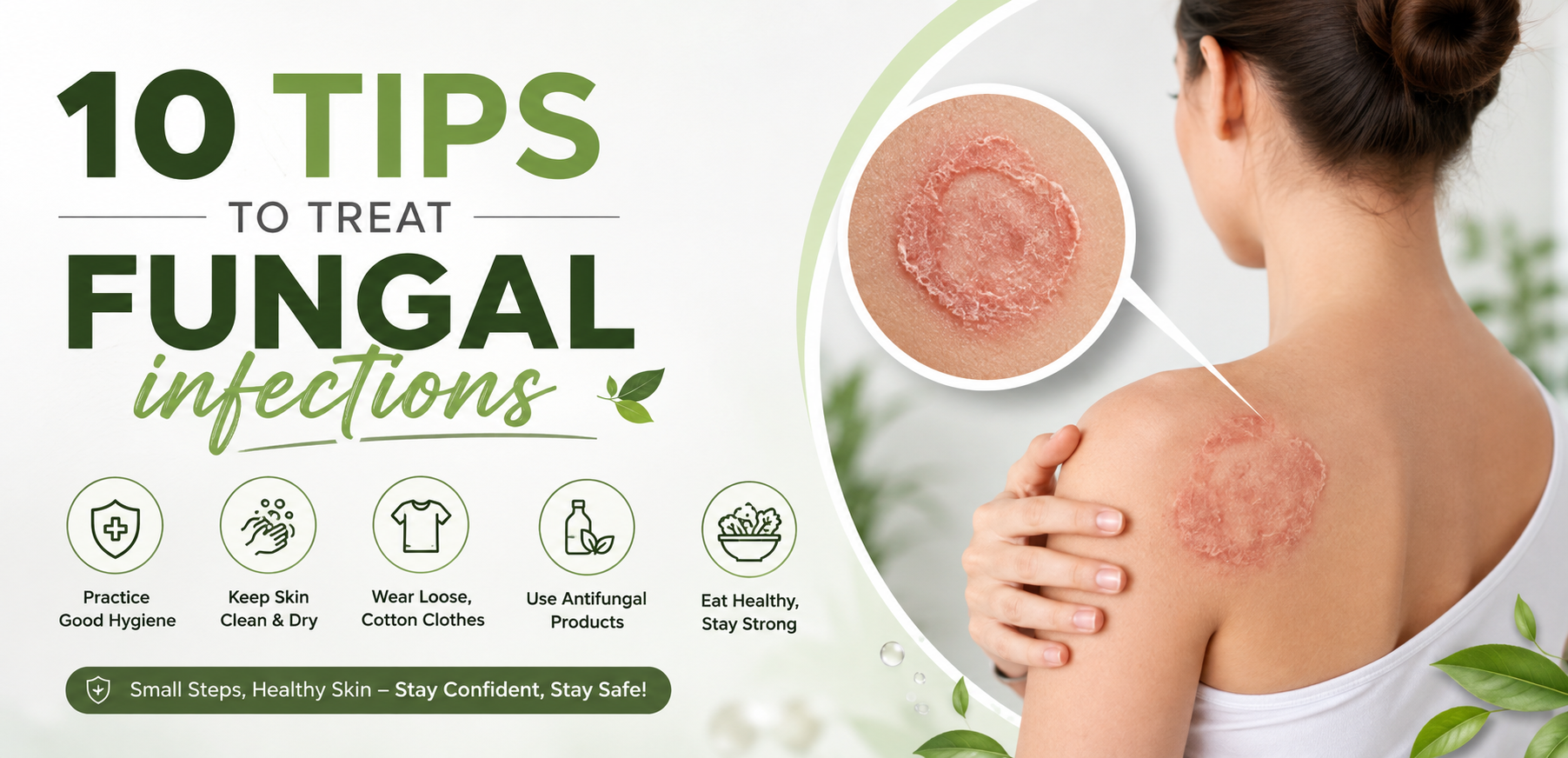
10 Tips to treat Fungal infections
Fungal infections are common skin problems that can affect people of all ages. They may develop on the feet, hands, nails, scalp, groin, or other areas of the body. Itching, redness, scaling, burning, and skin rashes are some common symptoms. If you are looking for 10 Tips to Treat Fungal Infections, simple hygiene habits along with the right antifungal treatment can help manage the condition and reduce the risk of it coming back.
What Is a Fungal Infection?
A fungal infection occurs when certain fungi grow excessively on the skin, nails, hair, or other parts of the body. Fungi grow more easily in warm, moist areas, which is why infections are common between the toes, in skin folds, around the groin, and in sweaty areas.
Common fungal infections include ringworm, athlete’s foot, jock itch, candidiasis, and fungal nail infections. Symptoms can vary depending on the affected area but may include itching, redness, dryness, peeling, cracking, or a circular rash.
What Causes Fungal Infections?
Fungal infections can develop for several reasons. Excessive sweating, humid weather, tight clothing, poor ventilation, and prolonged moisture can create an environment where fungi multiply easily.
Sharing towels, clothes, socks, shoes, or other personal items with an infected person can also increase the risk of infection. Walking barefoot in damp public areas such as swimming pools, gyms, and changing rooms may also expose the skin to certain fungi.
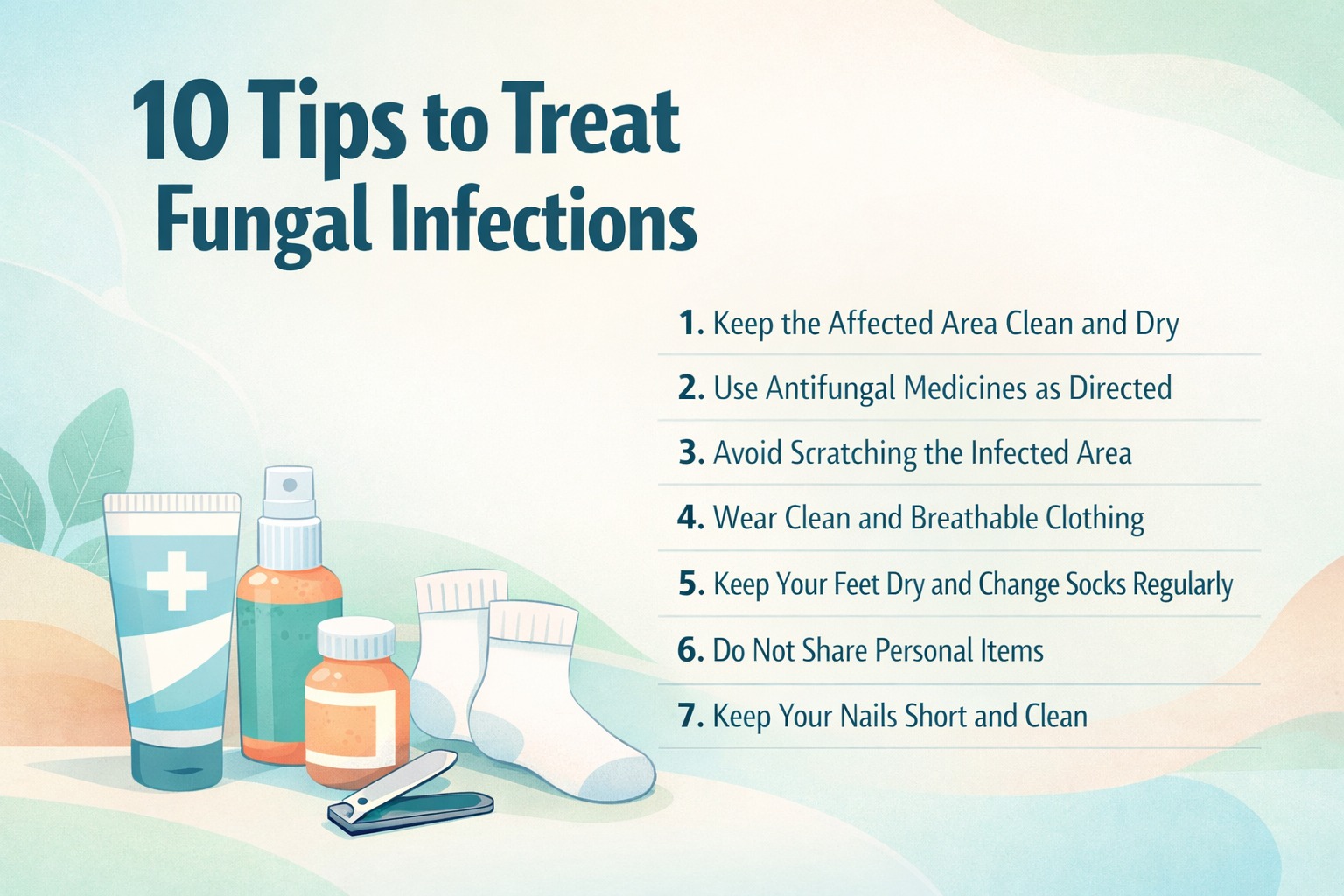
10 Tips to Treat Fungal Infections
1. Keep the Affected Area Clean and Dry
One of the most important steps is keeping the infected area clean and dry. Wash the area gently with water and a mild cleanser, then pat it dry carefully. Avoid vigorous rubbing, especially if the skin is irritated or cracked.
Pay extra attention to areas between the toes and skin folds because moisture can remain trapped there.
2. Use Antifungal Medicines as Directed
Antifungal creams, lotions, powders, or other medicines may be recommended depending on the type and location of the infection. Use the medicine according to the instructions provided by your doctor or pharmacist.
Do not stop treatment immediately after the itching or redness improves. Some infections may require continued treatment to help clear the fungus completely.
3. Avoid Scratching the Infected Area
Fungal infections can be very itchy, but scratching can damage the skin and increase irritation. Broken skin may also become vulnerable to other infections.
Try to keep your nails short and avoid touching the affected area unnecessarily. Wash your hands after applying medication to prevent spreading the infection to other parts of your body.
4. Wear Clean and Breathable Clothing
Choose loose and breathable clothing whenever possible. Tight or non-breathable clothes can trap sweat and moisture against the skin.
Change clothes after heavy sweating and wash them regularly. Keeping the skin dry can help create an environment that is less suitable for fungal growth.
5. Keep Your Feet Dry and Change Socks Regularly
If the infection affects your feet, keeping them dry is especially important. Change your socks regularly, particularly after exercise or excessive sweating.
Allow shoes to dry completely before wearing them again. Avoid wearing damp socks or shoes for long periods, as trapped moisture can encourage fungal growth.
6. Do Not Share Personal Items
Avoid sharing towels, socks, shoes, clothing, combs, or other personal items with someone who has a fungal infection.
Wash towels, clothes, and bedding regularly, particularly if they come into contact with the affected area. These simple precautions can help reduce the risk of spreading infection within the household.
7. Keep Your Nails Short and Clean
When fungal infections affect the nails, keeping them clean and trimmed can help with general nail hygiene. Avoid picking, cutting, or damaging the surrounding skin.
Fungal nail infections can be difficult to treat and may sometimes require longer treatment. If a nail becomes thick, discoloured, brittle, or painful, a dermatologist can determine the appropriate treatment.
8. Avoid Steroid Creams Without Medical Advice
Do not use steroid creams on a suspected fungal infection unless a healthcare professional has advised you to do so. Steroids can reduce redness and itching temporarily, which may make the infection appear better while allowing the underlying fungal infection to continue.
This is one reason getting the correct diagnosis is important before choosing a treatment.
9. Keep Your Surroundings Clean and Dry
Personal hygiene is only one part of preventing fungal infections. Keep commonly used areas clean and dry, especially bathrooms and areas where moisture tends to collect.
Wash towels, socks, bedsheets, and clothing regularly. If you sweat heavily, change damp clothing as soon as possible.
10. See a Dermatologist if the Infection Persists
If a fungal infection does not improve with appropriate treatment, keeps returning, or spreads to other areas, professional evaluation is recommended.
A dermatologist can examine the skin and determine whether the problem is actually a fungal infection or another skin condition that may look similar. Some infections, particularly those involving the scalp or nails, may require prescription treatment.
How Long Does It Take for a Fungal Infection to Heal?
The healing time depends on the type of fungal infection, the affected body part, its severity, and the treatment being used. Some mild skin infections may improve within a few weeks with appropriate treatment, while nail and scalp infections can take longer.
It is important to follow the recommended treatment schedule even when symptoms start improving. Stopping treatment too early may increase the chance of the infection returning.
Can Fungal Infections Come Back?
Yes, fungal infections can come back. Recurrence may happen if treatment is stopped too soon, the original source of infection remains, or the skin continues to be exposed to excessive moisture and sweating.
Sharing personal items, wearing damp clothes or footwear, and repeated exposure to contaminated surfaces can also increase the risk of reinfection. Keeping the affected area dry and following good hygiene practices can help reduce recurrence.
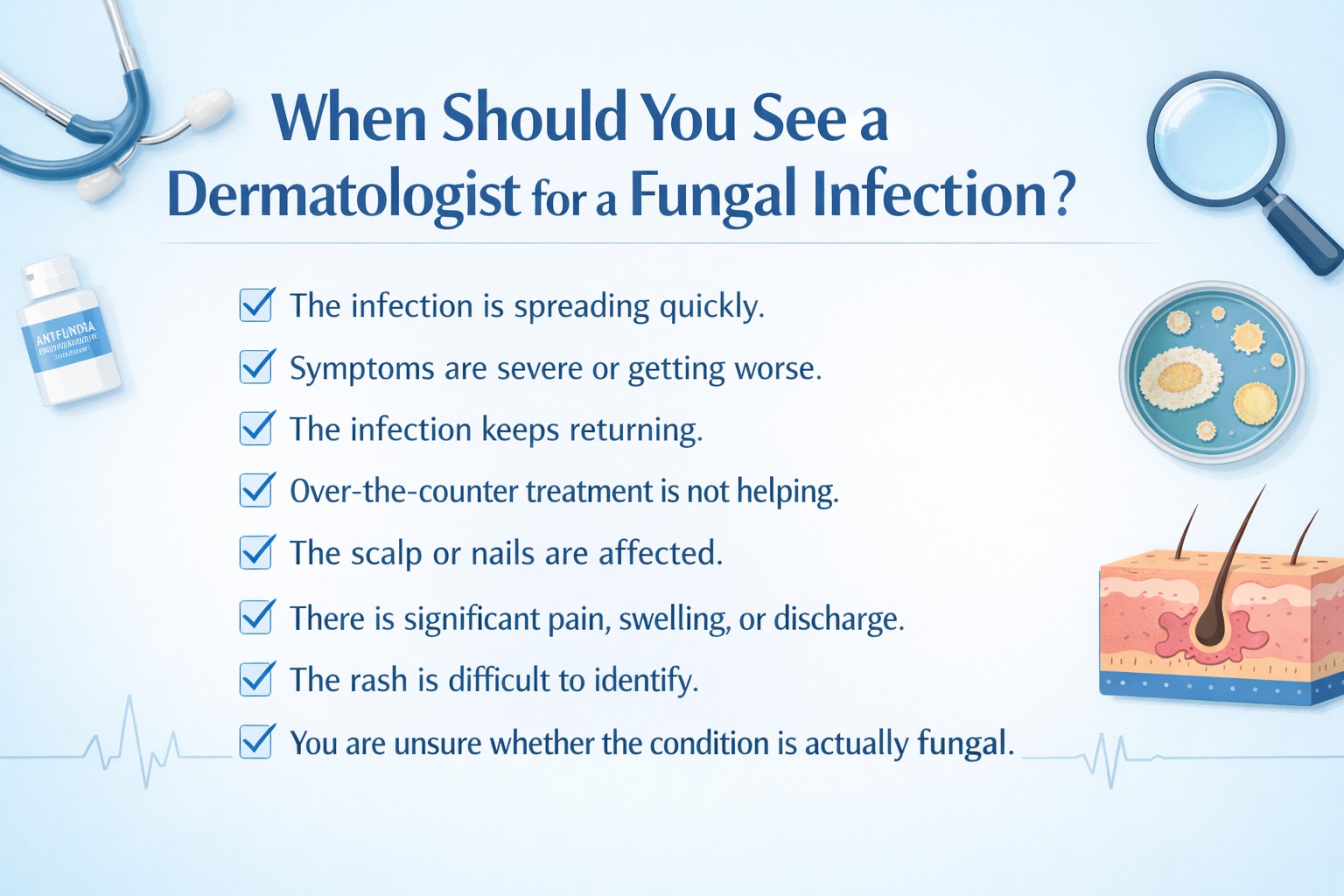
When Should You See a Dermatologist for a Fungal Infection?
You should consider seeing a dermatologist if:
- The infection is spreading quickly.
- Symptoms are severe or getting worse.
- The infection keeps returning.
- Over-the-counter treatment is not helping.
- The scalp or nails are affected.
- There is significant pain, swelling, or discharge.
- The rash is difficult to identify.
- You are unsure whether the condition is actually fungal.
A dermatologist can recommend appropriate treatment based on the type and location of the infection.
Conclusion
Fungal infections are common but can often be managed effectively with the right treatment and good hygiene practices. Keeping the affected area clean and dry, using antifungal medicines correctly, avoiding scratching, wearing breathable clothing, and maintaining personal hygiene are important steps.
If a fungal infection persists, spreads, or repeatedly comes back, do not rely only on home remedies or self-treatment. A professional skin examination can help identify the condition and guide appropriate treatment.
For patients looking for professional skin care in the local area, Dr Nikita Patel can provide dermatological evaluation and treatment guidance for fungal infections and other skin concerns. Early consultation can help you understand the cause of recurring or persistent skin problems and choose an appropriate treatment plan.
Frequently Asked Questions(FAQ)
The fastest approach is to identify the type of infection correctly and use an appropriate antifungal treatment as directed. Keeping the affected area clean and dry can also support treatment.
Some mild fungal infections may improve, but many require proper antifungal treatment. Delaying treatment can allow the infection to spread or become more difficult to manage.
The duration depends on the medicine and type of infection. Follow the instructions given by your doctor or on the medicine label rather than stopping as soon as symptoms disappear.
Steroid creams should not be used on suspected fungal infections without medical advice. They may temporarily reduce inflammation while allowing the fungal infection to continue.
Yes. Some fungal infections can spread through direct skin contact or through contaminated personal items such as towels, clothing, socks, and footwear.
Keep your skin dry, change sweaty clothing promptly, wear breathable clothes and footwear, avoid sharing personal items, and complete the recommended treatment.
Visit a dermatologist if the infection is spreading, recurring, severe, affecting the nails or scalp, or not improving with appropriate treatment.